
When Paul Lachance looks at the state of manufacturing today, he sees an industry on the cusp of a new era. Artificial intelligence, digital transformation, the Internet of Things — these are the technologies that are poised to reshape the factory floor, just as surely as steam power and electricity did in centuries past.
But as Lachance, a veteran manufacturing technology strategist and Chief Industry Strategist at Software Equity Group, is quick to point out, this isn’t the first time the industry has stood at such a crossroads. In fact, it’s the fourth.
“We’ve had four major industrial revolutions,” Lachance explained on a recent episode of the Manufacturing Executive podcast. “When I say industrial revolution, there are really technology revolutions.”
The first one was in the late 1700s, and it was really the introduction of steam power and other mechanization techniques, which at the time was just amazing technology. And it changed the world.
From the rise of electricity and mass production in the late 1800s to the advent of electronics, computers, and robotics in the 1960s, each new wave of technology has brought with it a fresh set of challenges — and opportunities — for manufacturers. And as Lachance sees it, the lessons of those past disruptions hold the key to navigating the one we’re in now.
Take the story of Samuel Slater, the British expat who launched the American textile industry by building the first mechanized mill in Rhode Island in the late 1700s. Slater saw the potential of the new technology and moved quickly to capitalize on it, setting off a boom that would transform the region’s economy.
Or consider the automobile industry, which was upended first by the assembly line and later by the rise of robotics. The companies that emerged as leaders in each era were the ones that understood the macro trends, looked for practical applications of the new technologies, and focused on real ROI rather than shiny objects.
Technology revolutions come with these industrial revolutions. And there are major gains, and there are the companies that were before and after these events occurred.”
So what does that playbook look like for manufacturers trying to navigate the AI and Industry 4.0 revolution? For Lachance, it starts with a commitment to ongoing education — not just about the technologies themselves, but about the broader trends shaping the industry.
“Pay attention to both the macro and micro environment,” he advised. “Know what is going on. You can’t stick your head in the sand and ignore these things and hope that they’re just going to go away and business climate is going to improve.”
At the same time, Lachance cautioned against getting caught up in the hype or the fear of missing out. For every successful early adopter, there are plenty of cautionary tales of manufacturers who chased the shiny new thing without a clear strategy or ROI in mind.
The key, he argues, is to focus on common sense improvements and practical applications of technology that solve real business problems. And when it comes to choosing technology partners, manufacturers should look for vendors who are committed to delivering real outcomes, not just impressive features.
“You have to make sure that whatever technology partners you go with, it’s more than just the software,” Lachance said. “Are they going to be your partner through the customer success phase, implementation, data migration, ongoing training and support, customer success?”
Perhaps most importantly, Lachance urged manufacturing leaders to remember that even in an age of AI and automation, human ingenuity and strategy still have a vital role to play.
“Ultimately, the humans think it through, see the opportunity, see the challenges, and then enable the technology,” he said. “That’s got to come hand in hand with your vendors that are working with you.”
In other words? The industrial revolution playbook may be 200 years old — but with a little analog wisdom and a lot of digital savvy, it’s as relevant as ever.
“It’s an amazing time, but we’re living in it right now, which we will all look back at this stuff the same way,” Lachance mused. “We look back at other technology revolutions and think, wow, that was a crazy time. But it really did settle out, and we’re better for those of us that paid attention.”
For manufacturers ready to write the next chapter in that story, the message is clear: study the past, embrace the future, and above all, keep learning. The revolution will be digitized — but it will be led by those who remember the power of good old-fashioned human ingenuity.
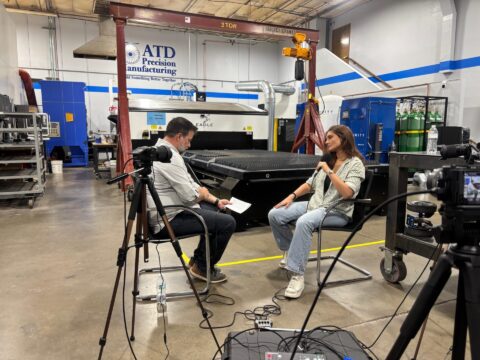
To hear more of Paul Lachance’s insights on the past, present, and future of manufacturing technology, check out his full conversation with Joe Sullivan on the Manufacturing Executive podcast. And for a deeper dive into the latest industrial tech trends, don’t miss Software Equity Group’s new manufacturing report, available now on the company’s website and LinkedIn.