
Wolfram Manufacturing had its beginnings as a CNC machine shop, with one machine, catering primarily to the oil and gas industry, but since its founding fifteen years ago, it has evolved into an advanced service using cutting-edge technologies to enhance the efficiency not only of its own machining capabilities, but those of other manufacturers around the country. Using in-house and third-party software and hardware solutions, the firm has become a valuable consulting, training, and distribution partner to assist others in achieving their best results. Further, their machining operations have diversified into several other industries, replacing oil and gas as their main focus.
Founder Nathan Byman’s quest to continuously maximize efficiency from the outset led to installing Caron Engineering’s Tool Monitoring Adaptive Control system (TMAC) on the company’s very first machine. With that technology overseeing their machining operations, the company was able to quickly and precisely improve production. Wolfram was so successful in using the technology that they soon became an official integrator for Caron, teaching others what their advanced system could do to improve operations. This created the services side of the business, selling, installing, and training customers throughout the western United States in the technology, in addition to their machining work.
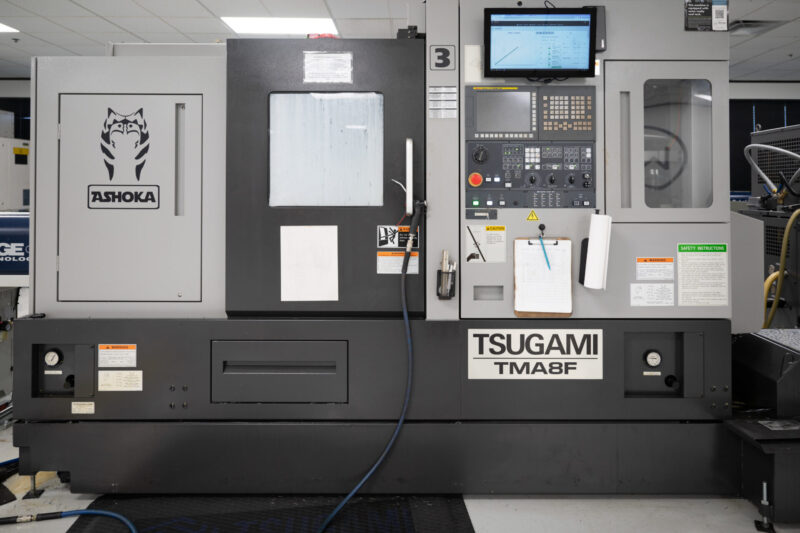
This relationship with expanding manufacturing technology led to Wolfram developing the OnTakt software system to oversee production and operations in their own machine shop. Kirby Martinez, Wolfram’s OnTakt Product Manager, says of their adoption of these new ideas, “That led to slowly implementing different layers of technology into our processes to automate as much as possible. Many people think automation is just adding a robot, which can be part of it, but really, that just covers material handling. To actually automate, there is a layering of many different technologies that all work together. Caron Engineering Products are designed to eliminate the need for a human to perform a repetitive task that a computer can do more reliably and accurately. We like to think of the Caron Engineering products as Virtual Operators that are always working in our shop, freeing up our actual operators to do the more important work. Pair that with our OnTakt system, which serves as a virtual supervisor collecting data from our machines and the Caron Engineering products across our entire shop, and now we have several layers of technology working together to automate our processes and truly drive up our efficiencies.”
By allowing humans to focus on critical thought processes, rather than repetitive tasks, productivity, quality, and innovation can thrive. In a time when skilled machinists can be hard to find, these automated processes allow more work to be done with more precision and fewer employees.
Industry Insider Knowledge is Critical
Wolfram’s operation as a working machine shop gives their creation of OnTakt in 2020 an important leg up on other shop management software. Martinez says, “There are other solutions out there you can buy off the shelf for what you’d consider machine monitoring. We’ve tried many of them, but many are products built by software companies whose employees have never actually run a machine, or if they have, it was long ago. We felt that disconnect because their software never really seemed to function well in the shop environment. They could provide us with data, but they could never visualize it, track certain metrics, or create actions the way we wanted. We would try to work with them on these issues, but there was never any momentum to develop the improvements we were looking for. Right now, everyone’s excited about AI, but AI can’t do anything without the right data. That is why implementing a system like OnTakt, which pulls the machine data you actually need, is step number one for bringing AI into manufacturing.”
The development of OnTakt for internal use to work for both job shops and production shops eventually led to Wolfram starting to market the system to other companies. The system is designed to provide valuable information to the user on the shop floor, through engineering and operations departments, all the way to leadership, to improve every aspect of production.
“We’re really the only machine monitoring software that’s built by a machine shop,” says Martinez. “It’s more dynamic and customizable to fit with any shop that wants to use it, but we also have a lot faster turnaround on development work. We can test it in a real shop and put it through its paces because we’ve got a live environment that we can do our quality testing in.”
Machining Expansion Retains Efficiency
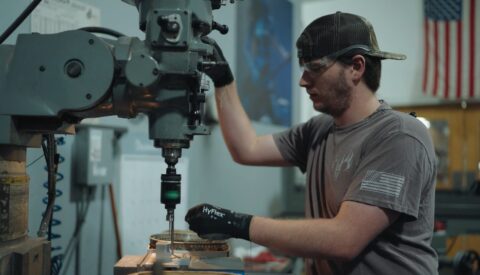
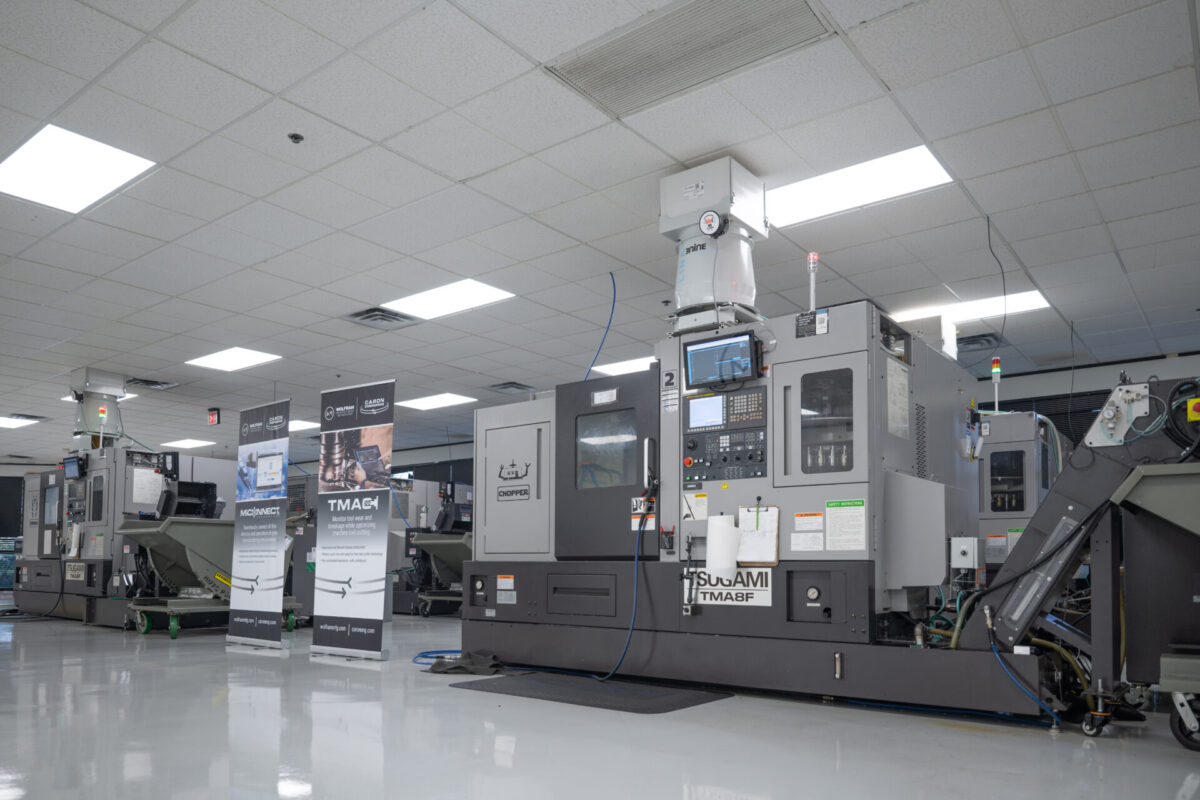
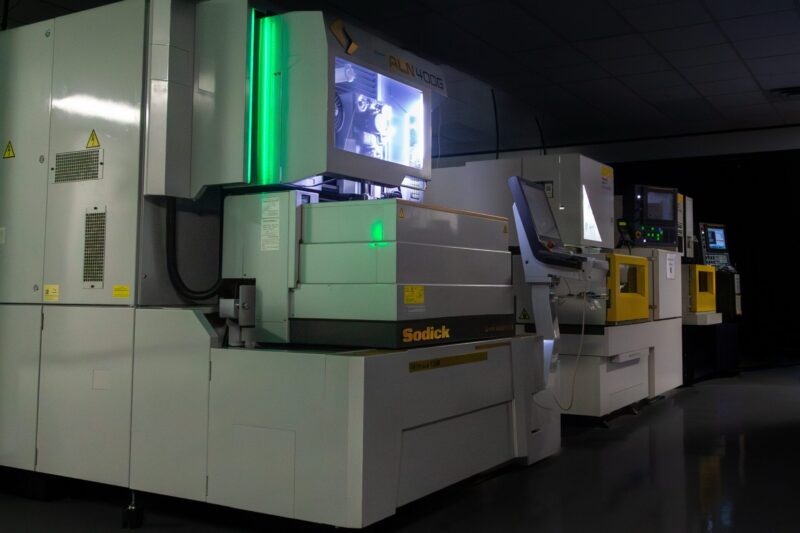
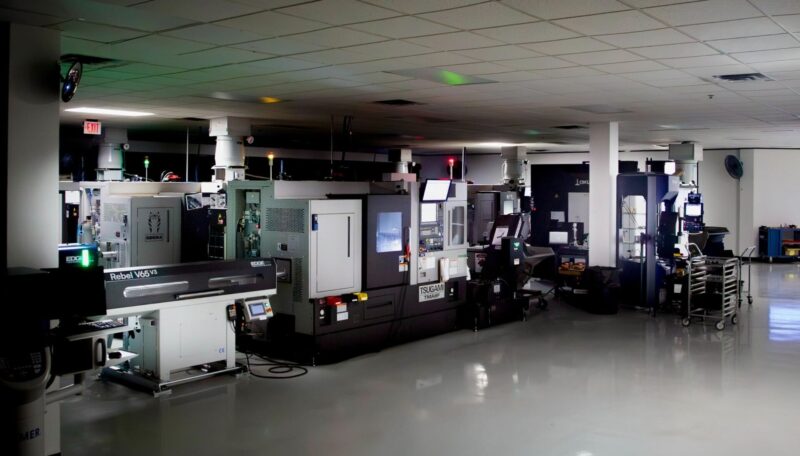
While the company’s service side has consistently grown over the years, the machining side has also grown to remain their dominant focus. Wolfram’s machine shop has replaced cyclical, lower volume work in the oil and gas industry with higher volume aerospace, firearms, and other types of customers, further improving their own efficiency with fewer set-ups for changeovers for different products needed. The 30,000 square-foot shop continues to pump out thousands of parts each week and still has space to add more equipment to handle increasing workloads.
In recent years, the company has approximately quadrupled their output, while only about doubling their staff. Their systems allow them to average five machines being operated at one time by one person, and the technology allows many of their employees to be hired more based on their mindset and willingness to learn, rather than specific prior machining experience. Wolfram’s machine operations run 24 hours, with the overnight shift being monitored and managed by the automated systems unattended by human workers.
Quality and Technology Leading the Way
Their outlook is certainly positive, as Martinez says, “It seems like every time we add a new machine, thinking we’re going to open up extra capacity, it’s pretty much instantly filled. We run parts so efficiently that it’s pretty hard for me to imagine anyone beating our pricing for the quality provided. Our main focus is on building a robust process, automating as much as possible to improve efficiency, and maintaining our high-quality standards. We know that if we do those things well, the pricing will work itself out. We pride ourselves on being a high-precision shop. We believe we can refine a process that profitably manufactures parts with tight tolerances and can do so reliably.”
Wolfram’s “data driven production” continues to expand in various industries, as does the Caron Engineering service field that they offer to other manufacturers. Future emphasis on expanding their OnTakt software will be a high priority for them, as more companies become more accepting of technologies that will allow them to increase efficiency as the re-shoring of manufacturing makes that a necessity. Being able to create more and better products in the quickest, most economical way benefits manufacturers and consumers alike, and Wolfram is helping to lead the way.