
When it comes to digital adoption in manufacturing, the challenges are as varied as the companies themselves. Large global enterprises grapple with inconsistent data across far-flung facilities of varying ages. Small and mid-size shops often lack the equipment to generate insights in the first place. And everyone, it seems, is chasing the allure of AI without always understanding what it takes to get there.
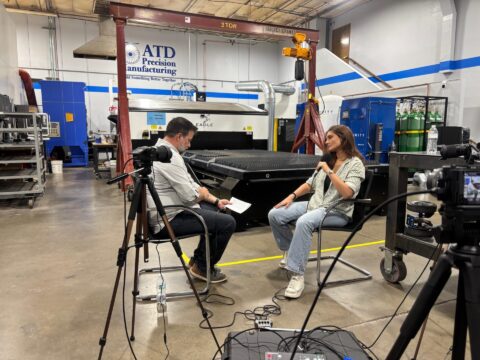
Enter Conexus Indiana, a nonprofit that’s been working since 2007 to ensure the state’s advanced manufacturing and logistics (AML) ecosystem is firing on all cylinders. As Bryce Carpenter, the organization’s EVP and Chief Operations and Strategy Officer, explained on a recent episode of the Manufacturing Executive podcast, that means tackling digital adoption from all angles — and bringing the right players to the table to make it happen.
“Large companies and small companies have similar challenges with some nuance,” Carpenter noted. “Our large partners — think of like the Cummins, the Eli Lillys, the FedExes of the world — they are challenged with, in order to truly harness some of the tools and the solutions that can be extracted through AI and continue digital adoption at the moment, they’re looking at a global landscape of manufacturing facilities spread out all throughout the world with facilities of different ages, equipment of different ages.”
It’s something that we spend a lot of time talking with them about and hearing about their struggles, is just finding a common data language in order to continue to gather more insights from the equipment, in order to truly find meaningful returns from some of their AI efforts. They’ve got to get a lot of the noise out of their data.
For smaller manufacturers, the barriers to entry can be even more fundamental. In workshops that Conexus facilitates, Carpenter often encounters companies eager to explore AI solutions — but that admit they’re not actually collecting the data they’d need to make it work.
“It’s about the fundamentals of, do you have the equipment to generate the insights to make these investments, to take on an AI project, to focus on a bottleneck?” he explained. “What level of confidence can you generate through data before you make that type of investment?”
That’s where Conexus comes in. By serving as a neutral convener, the organization helps manufacturers of all sizes identify their challenges, understand their data needs, and connect with the resources and expertise to move forward. They also work closely with educational institutions to ensure that workforce development programs are keeping pace with the breakneck speed of technological change.
Education has to move as quickly as business does, right? They can’t afford to be on their own timeline. Coupled with every digital adoption investment, our workforce development, our workforce alignment needs to make sure that you have the skills and abilities to maximize the impact of a single piece of equipment, let alone help translate your workforce on your long-term digital adoption strategy.
To that end, Conexus has partnered with Ivy Tech, the largest community college system in the country, as well as universities across Indiana, to align curriculum with industry needs. They’ve also convened the Indiana Talent Association, a group of 48 advanced manufacturing and logistics professionals who review educational programs and provide feedback on everything from key skills to cost and duration.
The goal, Carpenter emphasized, is not just to churn out more graduates, but to create training that is as efficient and effective as possible. “Manufacturing, they need skills to be taught within seven days, and it would be great if it was on site,” he said. “So how does a college go from a semester to seven days? Those are the types of challenges — and oh, by the way, you better figure it out pretty quickly.”
For manufacturers outside of Indiana who are looking to accelerate their own digital adoption journeys, Carpenter had some straightforward advice: seek out the organizations in your state that are already working on these issues. That might mean connecting with your local chamber of commerce, manufacturing association, or quasi-governmental entity focused on economic development.
“There will be an organization in your state that is working on this,” he said. “All those organizations, if they’re focused on the right things, are similarly focused on bringing together groups of companies to learn from one another. Because again, it’s the people that are in it every day, seeing the challenges, the opportunities firsthand — they can really be driving the results.”
The road to digital adoption is long and winding. But as Conexus Indiana’s example shows, when manufacturers, educators, and policymakers all pull in the same direction, the destination comes into view a whole lot faster.
“We just hope that manufacturers log in, access the materials, and hopefully find some use to it,” Carpenter said of the resources Conexus is making available on its newly revamped website. “Not just to learn more about us, but hopefully the advanced manufacturing ecosystem at large.”
In other words? The code may be cracked — but the real work is just beginning.
To learn more about Conexus Indiana’s work supporting digital adoption and workforce development in advanced manufacturing and logistics, visit conexusindiana.com. You can also hear Bryce Carpenter’s full conversation with host Joe Sullivan on the Manufacturing Executive podcast.