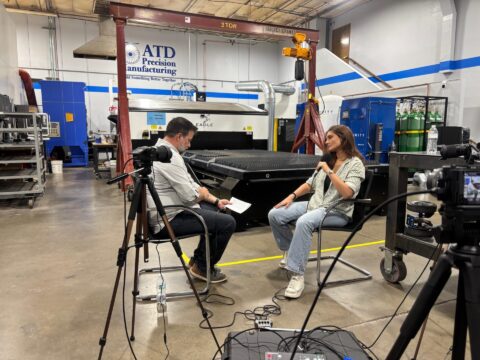
In a recent episode of the Manufacturing Executive Podcast, host Joe Sullivan interviewed Pete Connolly, CEO of the New Jersey Manufacturing Extension Program (NJMEP), for an inside look at how the MEP network supports small and mid-size manufacturers across the country.
Connolly brought a wealth of experience to the role, having spent over 40 years in the defense industry, including leadership positions in two manufacturing divisions at DRS Technologies as it grew from $16 million to $10 billion in revenue. He joined NJMEP’s board in 2008, became chairman in 2012, and took over as CEO in 2021.
The MEP network, part of the National Institute of Standards and Technology (NIST), consists of 51 centers — one in each state and Puerto Rico. Its mission is to provide training and consulting to small and medium-sized manufacturers, helping them become more efficient, profitable, and resilient. In New Jersey alone, NJMEP serves around 10,000 such companies.
Our goal is to be training and consulting to the small and medium businesses in our state…We work with their vendors…We give them access to resources. We develop their skills. We want to make them more efficient, more profitable, and most importantly, stay in New Jersey.
A key focus for NJMEP and other MEP centers is addressing workforce shortages and the skills gap. Connolly highlighted several creative initiatives aimed at attracting the next generation of talent, including a student video contest called “What’s So Cool About Manufacturing,” a mobile training lab RV that visits high schools and community events, and the “Future Makers & Creators” tour for high school and college students to experience modern manufacturing firsthand. NJMEP also provides on-site training to upskill incumbent workers and offers customized programs for underserved groups like veterans and women.
The conversation turned to the challenges of reshoring manufacturing in the wake of supply chain disruptions during the pandemic. While there’s strong interest in bringing production back to the US, Connolly noted that cost remains a significant barrier, driven in part by Wall Street’s focus on quarterly profits. He pointed to pharmaceuticals as a particular area of concern, with most production concentrated overseas.
Connolly shared a success story of NJMEP’s impact: its work with Mac Products, an electrical components manufacturer that had collected a wealth of data but didn’t know how to leverage it. NJMEP’s team analyzed the data, conducted workflow and supply chain analysis, and equipped the company to act on the insights. The results were impressive: $3 million in new sales, $1.5 million in cost savings, and 10 new jobs. Mac Products even hosted the governor’s signing of a bill creating a $500 million manufacturing tax credit, which NJMEP helped craft.
We put all that together and taught them what their data was saying. So out of that, they actually got $3 million in new sales that kept about a million and a half in employed 10 new people.
The episode also covered the rollercoaster ride of the MEP defunding scare in early 2023, when the Department of Commerce initially moved to defund the centers. Swift pushback from governors and legislators got the funding restored, but the incident highlighted the need to better align the MEP program with the Commerce Department’s mission, potentially by moving it to a different agency.
For manufacturers looking to engage with their local MEP center, Connolly recommended visiting the NIST MEP website and clicking on their state to find contact information. Connecting via state business and industry associations is another avenue, as most partners closely with the MEPs. The organizations often cross-promote and offer reciprocal discounts.
Throughout the conversation, Connolly’s passion for supporting manufacturing shone through. As he put it, “I love every minute of dealing with manufacturers. I can walk into a manufacturing facility and probably look around pretty quickly and say, here’s where we can help you right away.”
With advocates like Connolly and the MEP network in their corner, small and medium-sized manufacturers across the country are well-positioned to navigate the challenges ahead and continue driving the industry forward.