
When Marcus Sheanshang took the reins of his family’s custom packaging business, JBM Packaging, he knew he needed to get creative about finding talent. Staring down the twin challenges of an aging workforce and a need for sustained growth, Sheanshang turned to an often overlooked talent pool: the formerly incarcerated.
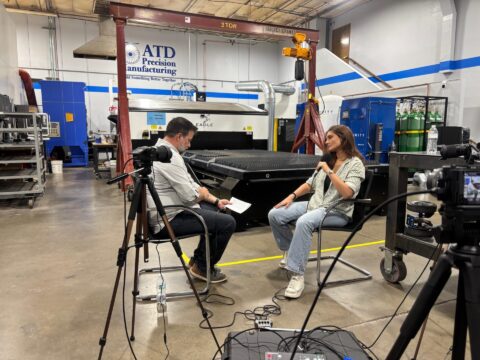
“We were trying to find a place where we could get new team members,” Sheanshang recounted on a recent episode of the Manufacturing Happy Hour podcast. “And through a lot of work, we kind of landed on people that were coming out of prison.”
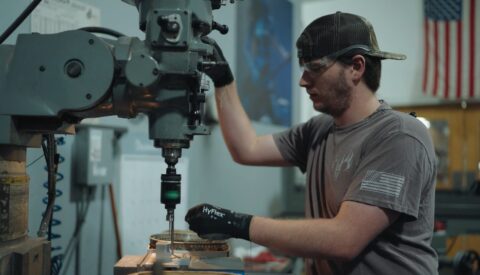
That decision, made back in 2015, has since blossomed into JBM’s Fair Chance program — a holistic approach to second-chance hiring that includes job training, mentorship, and ongoing support. Today, a full two-thirds of JBM’s workforce is made up of Fair Chance hires, and Sheanshang says the program has been transformative not just for the business, but for the lives of its employees and their families.
Amanda Hall was in prison for four years. Her parents were actually happy when they heard that she got put into prison because they were just happy to know that she was still alive. It was that bad of a situation… Amanda Hall is getting married next year. She won team member of the year with JBM two years ago. She’s got a beautiful daughter. And when you talk about generational poverty, we’re breaking generational poverty by their success.
For Sheanshang, the decision to embrace Fair Chance hiring was as much a business imperative as a moral one. With an estimated one in three American adults having some form of criminal record, tapping into this vast pool of potential workers just made sense.
But that doesn’t mean it was an easy sell at first. Sheanshang admits that he initially had reservations about hiring people with felony records, as did his wife and others in the community. Partnering with experienced organizations like the Ohio Department of Rehabilitation and Corrections, however, helped ease those concerns and pave the way for a successful launch.
The results speak for themselves. Sheanshang reports that JBM’s Fair Chance hires have lower turnover rates and higher productivity compared to traditional employees. They’re also fiercely loyal, he says — a testament to the power of being given a second chance.
You know, I’m sure there’s head hunters calling my people all the time. And we’re not perfect by any stretch of the imagination. But I know that people like to work at a company that’s doing good for society… If we can help, why wouldn’t we? You know, if we’ve got that opportunity that truly is a win-win for everybody, gosh, it’s a missed opportunity.
Of course, JBM’s success with Fair Chance hiring didn’t happen overnight. Sheanshang emphasizes the importance of setting clear expectations, providing structure and accountability, and focusing on fit rather than just filling seats. Not every candidate is a match, he notes, and that’s okay.
For other manufacturers looking to launch their own second-chance hiring initiatives, Sheanshang has some straightforward advice: don’t go it alone.
“Talk to somebody that’s already doing it,” he urged. “There’s no reason to recreate the wheel… If you want to learn more about it, just give us a call. Seriously, that’s one of the things we would love to say. This has worked for us. I’m not going to say it’s going to work for you. I can just share our experiences with what has worked.”
The bottom line? In a tight labor market where finding and retaining talent is a top challenge for manufacturers of all stripes, programs like JBM’s Fair Chance initiative offer a compelling solution — one that doesn’t just benefit the bottom line, but the broader community as well.
“I think it makes the city better,” Sheanshang reflected. “And it makes the likelihood of success with a launch a lot better too.”
For the estimated 77 million Americans with some form of criminal record, that success can’t come soon enough. And if more manufacturers follow JBM’s lead, it just might.
To learn more about JBM Packaging’s Fair Chance program, visit jbmpackaging.com. For more resources on second-chance hiring, check out the Manufacturing Happy Hour website. April 2026 is Second Chance Month, an opportunity to raise awareness around the challenges and opportunities of hiring the formerly incarcerated.