
When Jacob Sanchez’s high school cooking class was full, he got shunted into a machining course instead. Little did he know that twist of fate would set him on a path to becoming “the manufacturing kid” — a Gen Z evangelist for careers in the industrial sector.
“I saw in the back of the class with like the skater kids,” Sanchez recounted in a recent episode of the Augmented Ops podcast. “I didn’t want to do any of the work. We had to draw a front view and a side view of these parts, and I was like, this is punishment for something, because I hate my life here.”
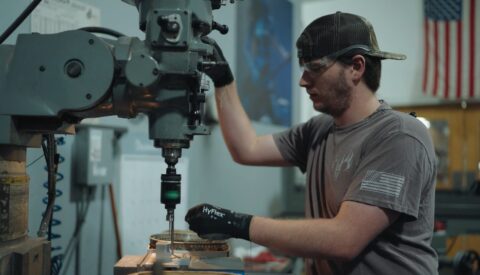
But then Sanchez saw the machines — and everything changed. He started staying after class to clean them, soaking up knowledge from his teacher. He’d duck out of other courses to program parts or work on projects. By the time he graduated, he was running the shop’s tool crib and had even machined a 3D surfaced plaque to commemorate a big football rivalry win.
I’m a product of the system because it is broken, yes. I had to find a way to do what I wanted to do. My high school counselor didn’t even want to help me because they found out I wasn’t going to college, and I was like, ‘I’m gonna be a machinist at Titans of CNC.’ All they heard was, ‘Oh, you’re not going to college, so you’re not gonna be anything.’ So we’re not gonna waste time on you.
Sanchez’s story is a testament to the power of exposure — and the dire need for an educational system that values and supports students who want to pursue trades. But it’s also a playbook for how the manufacturing sector can engage and retain the next generation of talent.
The key, Sanchez argues, is understanding what makes Gen Z tick. They crave autonomy, clear career paths, and a sense of purpose in their work. They want to see the impact of what they’re doing, not just punch a clock.
“The biggest thing that a lot of legislation that I’ve worked with that they’ve enjoyed at least, and this is just coming from me, and I’ve worked with Department of Maryland, the mayor and Secretary of Commerce in Rhode Island, Department in Texas,” Sanchez said. “The thing that they’ve enjoyed the most, whether they’re at one of my speeches or whether I’m actually doing a training with them, is this idea of autonomy.”
How can they help other businesses in their areas develop a sense of autonomy and structure with new hires so they can maintain a workforce? The biggest thing that small and medium-sized businesses in our industry have is finding the workers, and if you have an even bigger trouble keeping them, well, that’s a whole other problem.
Sanchez’s advice to policymakers and business leaders alike? Develop structured roadmaps that show new hires exactly where their career could take them within the organization. Provide real opportunities for growth and advancement. And don’t be afraid to shout your impact from the rooftops — or at least on social media.
“How do we help supply these businesses with structured roadmaps that they could start with and tweak a little bit for different careers?” he posed. “Show a new hire, ‘Hey, you’re coming on as a machinist one in my business, and by this time in three years or whatever, you will have the opportunity for X, Y, Z.'”
Of course, even the best-laid plans will falter without a pipeline of skilled talent. That’s why Sanchez is on a mission to evangelize for manufacturing careers in a language that Gen Z understands: TikTok videos, Instagram stories, YouTube vlogs. He’s even toying with the idea of starting his own trade school — a “Gen Z for Gen Z” approach to hands-on industrial training.
The curriculum? Machining, obviously — that’s Sanchez’s “bread and butter.” But also robotics, machine tending, and perhaps most intriguingly, marketing for manufacturing.
“The reason I’ve been such a successful marketer and creator in the industry has been my industry background,” he explained. “It’s not that I’m some whiz at video editing or whatever. It’s the industry background. So I would quickly create a marketing class that worked extremely closely with those machinists and those robot programmers, designers, whoever, because they are going to be insanely valuable as a marketer and make way more money if they actually have a background in the stuff.”
In other words, it’s not just about training the next generation of skilled trades — it’s about empowering them to be ambassadors and advocates for the sector as a whole. And if Sanchez’s own trajectory is any indication, that advocacy has the power to change lives.
“I guess my last question is, let’s assume you have the trade school,” mused podcast host Jonathan Lipsin as the conversation wound down. “What would be the first class that you would put on the curriculum for that first class?”
Sanchez didn’t miss a beat.
“Respect for the people who do the work every day,” he replied. “That’s a great note to end this episode on. Respect for the people, and respect the Gen Z. Bring it on.”
We couldn’t have said it better ourselves.
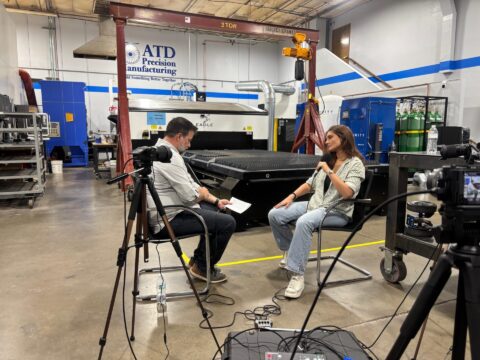
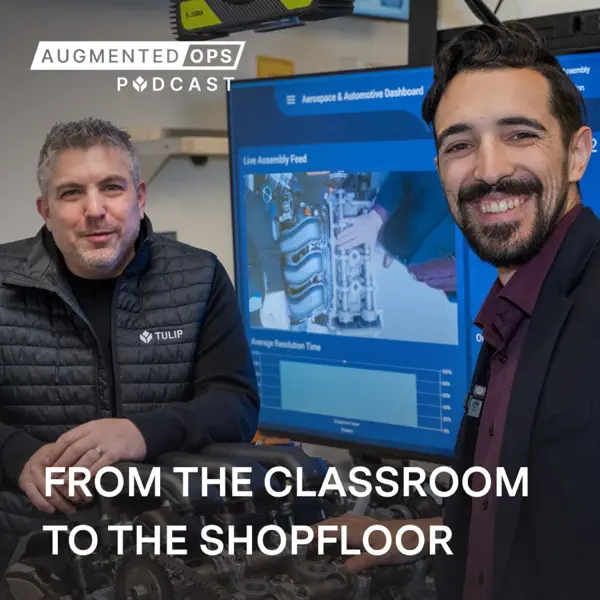
To hear more of Jacob Sanchez’s insights on engaging Gen Z in manufacturing careers, check out his full conversation with Jonathan Lipsin on the Augmented Ops Podcast. And to see the “manufacturing kid” in action, follow Sanchez on TikTok, Instagram, and YouTube.