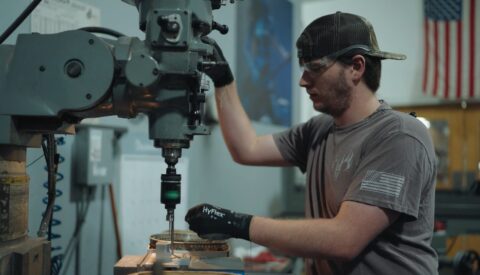

When a seasoned manufacturing operator retires, they often take decades of hard-won knowledge with them. The intricate tips and tricks they’ve learned to build complex products — the kind of expertise that doesn’t fit neatly into standard operating procedures — fade away, putting production at risk.
This loss of “tribal knowledge” is a growing crisis for manufacturers, especially as the pace of retirement accelerates. But a new breed of software is offering a solution: automated work instructions that capture and distribute veteran insights in real time.
Fil Aronshtein, co-founder and CEO of DRAC, is on a mission to bring this technology to the shop floor. His company is building what he describes as the first automated work instruction platform, designed to bridge the gap between engineering and production.
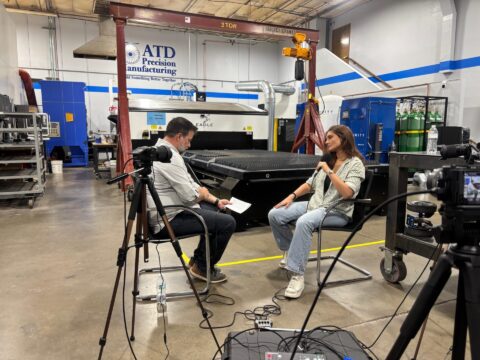
“When your manufacturing facility that’s heavily reliant on a very talented person who knew how to do that one thing really well, your facility hasn’t forgotten how to do that thing, right?” Aronshtein explained on a recent episode of the Manufacturing Executive Podcast. “You never wrote it down. The facility hasn’t forgotten to do it, and very often that’s a critical, critical component of, or a critical part of a very, very complex process.”
And so when you end up having really out of date work instructions that are really tedious to keep up to date, you end up having a facility that is a very tough bottleneck for a lot of other facilities as well.
The problem, Aronshtein argues, is that traditional work instructions are painfully manual to create and nearly impossible to maintain, especially in high-mix production environments. Manufacturing engineers can spend weeks or months piecing together PowerPoint decks or Word documents, only to have them fall out of date with the next engineering change order.
DRAC’s platform aims to automate the bulk of this grunt work. Manufacturers upload a CAD file, which the software runs through a physics simulation to determine the optimal assembly sequence. It then generates 3D animations of each assembly step, which manufacturing engineers can annotate with the kind of tribal knowledge that doesn’t show up in a drawing.
The result is what Aronshtein calls an “80/20 tool” — 80% automation of the tedious stuff, plus a structured way to capture and distribute the 20% that lives in workers’ heads. The goal is to create a living repository of shop-floor expertise, one that evolves in real time as processes change.
But for Aronshtein, the vision extends beyond just building better instructions. He sees technology like DRAC’s as key to revitalizing manufacturing’s image for a new generation.
We get the opportunity to not only tell their story, but get young folks excited about really cool complex systems again… It’s sort of like getting the opportunity to show this next generation of kids that like, no, no, no, if you want to build something, if you want to work with your hands, if you want to be a part of manufacturing, you can absolutely do that.
By showcasing the cutting-edge work of its customers — from aerospace to agriculture, maritime to motorsports — DRAC hopes to challenge outdated perceptions of what manufacturing looks like today. Aronshtein is particularly active on Twitter, where he’s working to build a community around the future of the industry.
As manufacturing enters a new era defined by the power of AI and automation, the sector has a chance to reintroduce itself to the workforce of tomorrow. Solving the tribal knowledge problem is a critical step — not just to safeguard production today, but to set the stage for a renaissance on the shop floor.
“If you’re a manufacturer out there listening,” Aronshtein said, “we are an up-and-coming company. And let’s talk about how we love to work with manufacturers… We would love to change the way you build.”
To learn more about DRAC’s automated work instruction platform, visit www.dracinc.com. You can also connect with Fil Aronshtein on Twitter at @FilAronsh or via email at contact@dracinc.com.