🧭 Opening
This week marked one of the most consequential moments in the reshoring era. On October 10, the White House announced a 100% tariff on imports from China, a move that rattled global markets but confirmed what many manufacturers already sensed: cost-first globalization is ending, and the reshoring decade is accelerating.
While trade headlines dominated Washington and Wall Street, thousands of manufacturers gathered in Detroit and across the country for National Manufacturing Day events — celebrating a sector that’s not just adapting to change, but driving it. The contrast tells the story of modern manufacturing: turbulence abroad, momentum at home.
🏗️ Main Stories
1. 100% Tariffs Cement a Structural Realignment
The U.S. decision to impose an additional 100% tariff on Chinese imports, paired with new export controls on critical software, marks a defining shift from transactional trade policy to long-term industrial strategy. Markets dipped sharply as semiconductor stocks fell, but manufacturers saw something deeper — a signal that reshoring isn’t a policy fad, it’s the new operating environment.
For small and mid-sized firms, the message is clear: resilience is now the competitive edge. Building diverse supplier networks, sourcing locally when possible, and investing in relationship-driven manufacturing will define success in the coming decade.
Sources: Reuters (Oct. 10, 2025); AP News (Oct. 10, 2025)
2. China’s Rare-Earth Controls Expose Supply Chain Fragility
Beijing’s decision to expand export controls on rare-earth materials added new urgency to the push for domestic sourcing. The U.S. still imports over 80% of its rare-earth elements from China — materials essential to defense, EVs, and advanced electronics.
Malaysia and other regional suppliers warned that changes to tariff exemptions could ripple through global chip and EV supply chains. The event underscored a hard truth: industrial power is no longer just about production, it’s about control of inputs. Expect to see renewed U.S. investment in processing and refining critical minerals at home.
Sources: Reuters (Oct. 10, 2025)
3. Manufacturing Day Highlights Pride and Purpose
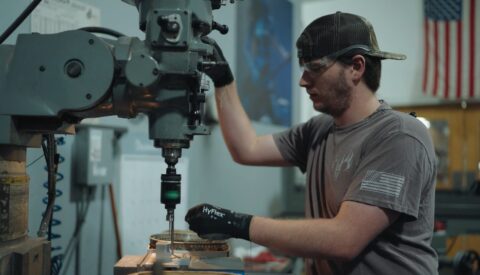
While policy debates captured the headlines, National Manufacturing Day (Oct. 7) showcased the heartbeat of the industry. Across hundreds of regional events, manufacturers opened their doors to students, educators, and community leaders to show what modern manufacturing looks like.
The message: this is skilled, purposeful work — central to America’s economic and national security future. In an environment where every company is competing for talent, these events reminded us that workforce development starts with pride in what we build.
Sources: White House Proclamation (Oct. 7, 2025); NAM Coverage (Oct. 7, 2025)
4. The Battery Show in Detroit Signals the Future Is Here
In Detroit, The Battery Show North America (Oct. 6–9) drew more than 40,000 engineers, suppliers, and OEMs — a visible reminder that the U.S. is serious about electrified manufacturing. Companies like Aisin and Boway Alloy showcased advanced materials, hybrid technologies, and new domestic partnerships designed to shorten supply chains.
The event underscored how America’s manufacturing renaissance is rooted in collaboration. Small and mid-sized suppliers are connecting with OEMs, startups, and policymakers — demonstrating that innovation thrives in networks, not silos.
Sources: Design News (Oct. 6, 2025); PR Newswire (Oct. 6, 2025)
5. Defense Supply Chain Expansion Receives Major Funding Boost
Congress approved $5 billion in advance procurement for Columbia-class submarines, injecting capital into a defense manufacturing ecosystem spanning hundreds of suppliers across Connecticut, Rhode Island, and the Midwest.
Industry observers highlighted the broader opportunity: using defense demand to strengthen dual-use manufacturing capacity — where commercial precision machining, materials, and automation firms can directly support national defense programs.
Sources: Defense News (Oct. 10, 2025)
⚙️ Around the Horn
-
Lawmakers urge tighter semiconductor equipment export controls to China (Oct. 7, 2025).
-
Trade advisors issue tariff enforcement updates across multiple industrial sectors (Oct. 6–10, 2025).
-
Malaysia warns U.S. chip policy shifts could reduce global supply efficiency (Oct. 10, 2025).
-
Experts call for CHIPS Act funding to include small supplier networks, not just mega-fabs (Oct. 10, 2025).
🔍 Key Insights
1️⃣ The 100% tariffs mark a multi-decade industrial realignment, not a short-term trade tactic.
2️⃣ Rare-earth dependency highlights the need for domestic sourcing and multi-supplier resilience.
3️⃣ 40,000+ attendees at The Battery Show and Manufacturing Day events show a nationwide manufacturing renaissance taking hold.
🧩 Looking Ahead
Next week, we’ll watch how manufacturers respond to new tariffs, how China’s countermeasures develop, and what early signals emerge from domestic sourcing networks preparing to fill the gap.
The path forward won’t be smooth — but it’s clear. American manufacturing isn’t retreating; it’s reorganizing for resilience. The challenge now is execution: connecting the small businesses, technologies, and people who can make this industrial realignment sustainable for the next generation.