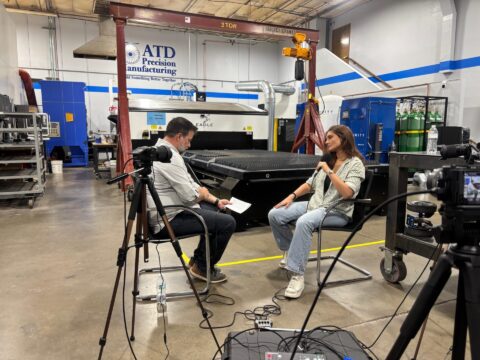

In a recent episode of the Manufacturing Executive podcast, host Joe Sullivan spoke with Chris Hale, founder and CEO of Clear Inc., about a paradoxical problem he calls the “success trap” – when landing a huge contract that could transform a manufacturer’s business also puts them at grave risk.
Hale explained that after a long R&D phase, a company may finally win a massive order from a big customer like NASA or Walmart. “Suddenly they want to order $30 million or $50 million worth, and that’s orders of magnitude more revenue across the entire company than they’ve ever done before,” he said. “It really causes these companies to reconfigure themselves.”
The demand is often sudden and acute, requiring the manufacturer to completely reorient around fulfilling the order. From capitalization to team dynamics to procurement to cash management, everything has to change rapidly. This creates compounding risks as the company contends with great immediate demand, a very demanding customer, and the need to scale at unprecedented speed.
One common mistake Hale sees is companies selling equity at an unfavorable valuation to fill the big order. “If you don’t have a capital strategy in place in advance of filling the order, you might find yourself out of options,” he warned. “And that’s one of the worst mistakes that we see.”
Another pitfall is relying on financing tools that are “backwards-looking by design” and can’t scale with the opportunity, like traditional credit lines. Companies need real-time visibility into cash flow as they put significant sums into fulfilling the huge order.
You might put six months of payroll into an order, and you better be sure that order is going to come back before that six months of payroll is due. And that’s a new challenge that teams that have been in a slow growth environment or haven’t had to handle these large-scale orders don’t necessarily have in their leadership yet.
Hale emphasized that “capital under pressure” dynamics are endemic to innovative industries taking on hard challenges, using SpaceX as an example of the liquidity crunches that can happen even with top talent.
I don’t know how a founding team can approach our modern environment thinking that things are going to be easy. I think the default state is volatility.
Clear’s platform aims to provide an alternative or complement to traditional bank lending that enables manufacturers to align their financial “stack” to aggressive growth objectives. But Hale said the solution has to start at the beginning with the sales process and contract negotiation. Having a capital strategy in advance is key.
While the current environment presents real challenges for manufacturers, it’s also a major opportunity. “The leaders and the most experienced companies out there should be leaders in this moment,” Hale said. “And we hope we can help them get there.”
To learn more, visit clearbusiness.com or clear.capital, or look for Chris Hale on LinkedIn.