
In the wake of supply chain disruptions, geopolitical tensions, and a growing desire to boost domestic production, the idea of reshoring manufacturing to the United States has gained serious traction. But according to Eddie Azad, founder and CEO of Parsec Automation, the reality is far more complex than the rhetoric suggests.
“Culturally, we have gotten used to instant gratification,” Azad explained on a recent episode of the Manufacturing Executive podcast. “We think, okay, this is a great idea, and you think, or you hope that it’ll happen, right? What it doesn’t do is, because once you look into the details and the requirements, you realize that, oh my god, there is a lot here to unpack.”
So one of the most important things that you got to do is one of the earlier questions that we talked about, which is, what makes sense to bring back or start up here, right? It’s not everything.
Azad, whose company has spent three decades helping global manufacturers manage operational complexities, argues that the first step in any reshoring initiative is to carefully consider which products and processes are actually viable candidates for domestic production. Industries with short shelf lives and low price-per-unit costs, like food and beverage, have largely remained stateside. But for more complex, high-value goods, the calculus is different.
“By the nature of those kinds of factories and operations, you are going to need better strategies,” Azad said. “It’s going to be a timeline that is not measured in days and weeks and months, but it’s years. And then there is a cost commensurate with those complexities and timelines and resources and experts.”
Those costs and timelines can be daunting. Azad points to the myriad factors that go into setting up a new manufacturing facility, from site selection and environmental studies to permitting and financing. And even for companies that already have a physical footprint in the US, the challenge of sourcing equipment and technology that is no longer produced domestically can be a major hurdle.
But beyond the practical considerations, Azad sees a need for a fundamental shift in how Americans think about manufacturing. “Manufacturing is not a dirty word,” he insisted. “We think about sexy things, you know, how you would and glitzy things, and manufacturing brings about this notion of dirty, smoky, greasy type of things that black-box things happen there.”
There are necessary and something comes out of it, but we look around, manufacturing is contributing to almost everything we do. So it’s actually an essential plant, and we need to look at a longer-term strategy of investment and propagating it.
That strategy, Azad argues, will require a coalition of private-sector leaders and government officials, working together to create a culture that values manufacturing as a critical driver of economic strength and innovation. It will also demand a new approach from manufacturers themselves, one that embraces agility, continuous improvement, and a willingness to invest in the future.
“You need to change the thinking from that capex mentality that we buy once, and we run it into ground; we will just keep doing the same thing,” Azad said. “The requirements in terms of customer demand and requirements change constantly. So you need to be able to, in an agile manner, respond to those.”
For manufacturers already operating in the US, that means shifting from a buy-once, run-forever mindset to one of constant innovation and incremental progress. It means staying attuned to the pulse of the economy, the competition, and the end consumer — and being ready to pivot at a moment’s notice.
None of this is easy. But for Azad, the alternative — losing ground to more nimble, forward-thinking competitors — is simply not an option.
“If you just say, well, this is the way we have done it forever, unless it’s an art and craft type of business that you say it’s very, very individual, there’s no volume, and people pay for that artisanal type of touch, you will find yourself that somebody else who does it better, does it faster, gives more variety to the consumers is going to take your daily bread,” he warned. “So you better not fall asleep on the job.”
The road to reshoring may be long and winding. But for those manufacturers willing to stay the course, the rewards — in the form of a more resilient, responsive, and competitive American industrial base — could be well worth the journey.
“Don’t be overwhelmed with all the changes, all the uncertainties,” Azad urged. “Instead, take a longer view that, look, we will make regular, incremental improvements. We are committed to this process. Stay with it. And just because it’s not easy, don’t give up on it.”
In other words? Bring manufacturing back to the USA — but be prepared for the long haul.
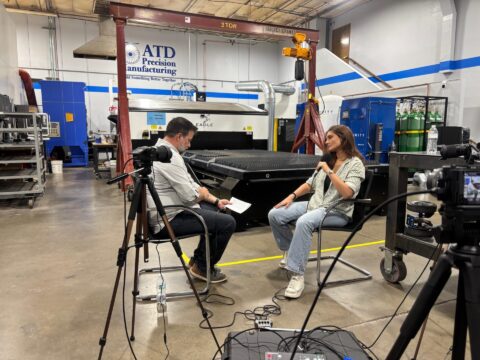
To learn more about how Parsec Automation is helping manufacturers navigate operational complexities, visit parsec-corp.com. You can also hear Eddie Azad’s full conversation with host Joe Sullivan on the Manufacturing Executive podcast.