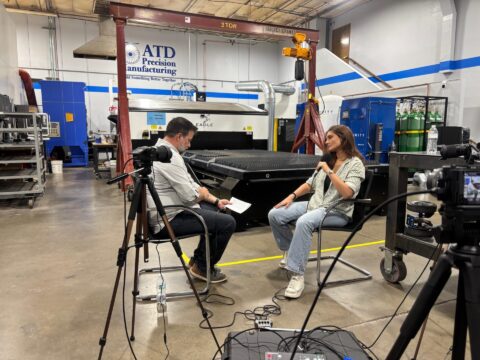

In the latest episode of the PFAS Pulse Podcast (P3), hosts Tom Simmons and Matthew Wallace sat down with Jonathan Thorn, Technical Director at Eurofins Lancaster Laboratory and PFAS Practice Leader for Eurofins US, to dispel common myths and misconceptions surrounding PFAS testing. As regulatory scrutiny intensifies and public concern mounts, it’s critical for industry professionals to separate fact from fiction in this complex field.
One key takeaway? Not all published testing methods are created equal. Thorn clarified that drinking water methods like 537.1 and 533 are not validated for matrices such as wastewater, groundwater, and surface water. Even the broader 1633 method, while covering various matrices, has limitations.
Method 1633 went through an extensive multi-laboratory validation. The largest one that I’ve ever been part of, which involved both DOD and EPA. It was validated for surface water, groundwater, wastewater, landfill leachate, sediments, soils, biosolids, and fish and shellfish tissue. But there are other things that that method hasn’t been validated for.
Thorn also tackled the misconception that Total Organic Fluorine (TOF) measurement is straightforward. In reality, current methods like combustion ion chromatography (CIC) can only approximate TOF and come with both positive and negative biases. Similar challenges arise with Absorbable Organic Fluorine (AOF) for aqueous samples and Extractable Organic Fluorine (EOF) for solids.
The conversation turned to the wide variability in real-world samples compared to those used in method validation. From drinking water with suspended solids and odors to non-homogeneous soils and high-moisture biosolids, labs must partner closely with clients to determine fit-for-purpose sample processing approaches.
Thorn also addressed the push for “PFAS-free” certifications in consumer products, driven by state-level legislation. He emphasized that while labs can provide non-detect reports based on reporting limits, the notion of certifying something as “PFAS-free” is misleading and sets an impossible bar.
“A lot of it tends to end up in that total fluorine or total organic fluorine, quote unquote realm. But then part of that question is always, well, I need a certificate that says it’s PFAS free. And in the world that we live in, from the analytical side, there’s no such thing as zero, right?”
The episode also delved into the scientific achievability of ultra-trace PFAS limits, the true costs behind PFAS testing, and the importance of treating PFAS laboratories as strategic partners rather than mere vendors. Thorn stressed that the expertise of experienced LC-MS/MS chemists is the most critical factor in PFAS analysis, far beyond instruments and methods alone.
For companies navigating the evolving PFAS landscape, it’s clear that a nuanced understanding of testing methodologies, lab capabilities, and strategic partnerships is essential. As Thorn put it, “If your PFAS lab does not have the level of expertise that you can lean on for support of your project outcomes, you shouldn’t be using that laboratory for your PFAS testing.”
Hear the full conversation and subscribe to HRP’s PFAS Pulse service at hrpassociates.com/pfas.