
When Haley Stevens talks about manufacturing, it’s not just policy — it’s personal. The Democratic Congresswoman from Michigan’s 11th District grew up steeped in the ethos of industry, from her parents’ landscaping business to the autoworkers in her community.
“My grandfather, my dad’s dad, he worked at Ford, he was a foreman,” Stevens recounted in a recent episode of the Manufacturing Happy Hour podcast. “It was just all this innovation and making and doing, just part of how I grew up.”
That early exposure set the stage for a career that has taken Stevens deep into the heart of American manufacturing. She served on President Obama’s Auto Rescue Task Force in the wake of the 2008 financial crisis, helping to steer the industry through its darkest days. In Congress, she’s championed legislation like the Chipping in Act, aimed at bolstering the domestic semiconductor workforce, and the Unearth America’s Future Act, focused on shoring up critical mineral supply chains.
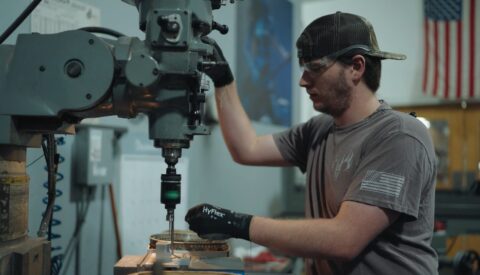
But for all her high-level policy work, Stevens never loses sight of the human element at the core of manufacturing. She makes a point of regularly visiting factories and shop floors across her district, from the sparkling clean facility of 70-year-old Alpha USA to the proprietary R&D labs of aerospace suppliers.
“The stuff I have seen is so cool,” she gushed. “The other favorite is, I’ll do a visit, and then it’s, ‘Here’s the part where you can take pictures, and here’s the part you can’t.’ It’s proprietary, or it’s tied in with something in defense. Our aerospace sector is absolutely amazing.”
When I think about where we are going for the next 25 years, when we hit the mid-century mark, who’s continuing to lead the free world? Well, it’s going to be American industry through free market principles that allow for equal opportunity and people to thrive.
For Stevens, supporting that industry means leveraging every tool in the government’s toolkit. She points to the tax code as a key lever for empowering both businesses and workers, from R&D credits to semiconductor incentives. But she also emphasizes the potential for deeper partnerships between the public and private sectors.
“There’s so much potential for partnership,” she explained. “And what I mean by that is not more government in your hair or regulations driving you crazy and trying to keep up with an ever-expanding and ever-changing rulebook, but ways in which we can ensure our country’s economic competitiveness.”
That sense of possibility, of a manufacturing renaissance driven by innovation and grounded in shared prosperity, is what gives Stevens hope for the future. She points to success stories like Light Guide Systems, a company founded by entrepreneur Paul Reisener in the depths of the Great Recession that has become a thriving part of the industrial ecosystem.
It’s going to be hands-on. It’s going to be driven by people who make great use of technological opportunities and are still able to innovate and become entrepreneurs.
Of course, the road ahead is not without its challenges. Stevens acknowledges the complexities of issues like tariffs, which have both bolstered and burdened American manufacturers in recent years. Striking the right balance, she argues, will require deep industry expertise in the halls of power.
“I’m all for having manufacturing geeks in public service,” she said with a laugh. “So that we can kind of like best implement things and maybe sometimes, if needed, slow down.”
Through it all, though, Stevens remains a steadfast believer in the resilience and ingenuity of American manufacturing. From the auto rescue to the industries of tomorrow, she’s seen firsthand the sector’s capacity for rebirth and reinvention. And she’s determined to keep fighting for its future — one factory floor at a time.
“You can start out on the shop floor, and you’re in the engineering cubicle, and then maybe come up with something, and you have a business idea, and it gets invested, or you get a grant or a small loan,” she mused. “And then all of a sudden, we’ve got a whole new enterprise happening.”
In other words, just another day in the never-ending story of American manufacturing.
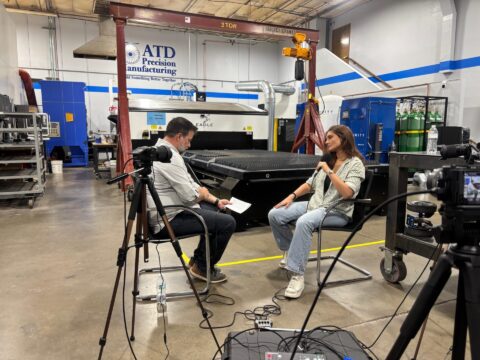
To hear Congresswoman Haley Stevens’ full conversation with Manufacturing Happy Hour host Chris Luecke, check out the latest episode of the podcast. And to keep up with the latest from Stevens and her work supporting the manufacturing sector, follow her on Twitter or visit her official website.