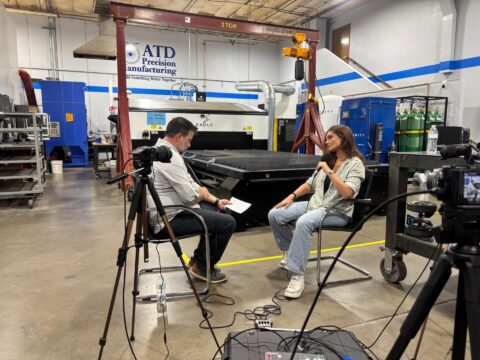

In a recent conversation on the a16z podcast with host Jorge Conde, Narasimhan laid out the strategic logic, the platform technologies he’s betting on, and the competitive threats keeping him up at night.
When Narasimhan took over, Novartis still carried the footprint of a 1990s mega-merger. The portfolio included consumer health, animal health, vaccines, Gerber baby food, generics, medical devices, and eye care. His diagnosis was blunt: capital was being misallocated across too many businesses, and investors didn’t need Novartis to diversify on their behalf. The spinoffs of Alcon, Sandoz, and a consumer health joint venture with GSK followed.
The result is a company now built around three platform technologies that Narasimhan considers durable competitive advantages.
The first is cell and gene therapy. Novartis brought the first licensed CAR-T cell therapy to market and launched Zolgensma for spinal muscular atrophy — a treatment priced above $2 million that is now reimbursed in 48 countries. The more exciting development, Narasimhan argues, is applying CAR-T to autoimmune diseases. Early results show durable remissions in lupus and myasthenia gravis through what he calls an “immune reset.” Manufacturing breakthroughs have compressed the production timeline from weeks to a two-day factory process with an eight-day vein-to-vein turnaround.
The second is siRNA, or RNA-based medicines. Narasimhan calls this a “de-risked modality” — once you identify the right target, the science behaves predictably. Novartis already has a PCSK9 siRNA for cholesterol requiring just one injection every six months. The longer-term vision is a single annual cardiovascular injection covering cholesterol, Lp(a), blood pressure, and inflammation simultaneously. The key technical barrier is expanding delivery beyond the liver to reach muscle, brain, and heart tissue.
The third is radioligand therapy, a technology that originated at CERN. It works by attaching a radioactive particle to a molecule that targets cancer cells. Novartis’s prostate cancer drug in this class generates more than $2 billion in annual revenue, with a neuroendocrine tumor treatment approaching $1 billion. The supply chain is extraordinarily demanding — the product has a four-to-five-day shelf life from factory to patient — and Novartis claims 99.9 per cent on-time delivery across eight to nine clinical programs.
We now have a two-day factory, an eight-day vein-to-vein turnaround for CAR-T. That changes the entire health economics of cell therapy — and it opens the door to autoimmune diseases where the unmet need is massive.
Narasimhan is measured on artificial intelligence. He frames it as an enabling technology rather than a standalone platform, and estimates a seven-to-ten-year horizon before it meaningfully reshapes R&D productivity. The potential is real — shaving two to four years off the current 12-to-14-year drug development cycle and improving the brutal probability of success, which currently sits at roughly one per cent from early research and ten per cent from clinical trials.
Internally, Novartis has put 3,000 scientists on Palantir’s Foundry platform and deployed Microsoft Copilot across the organization. Externally, the company has partnered with Isomorphic Labs to apply AlphaFold 3 to previously undruggable protein targets and invested in Bolts Bio, an open-source public benefit corporation. Narasimhan himself uses AI to generate podcast-style summaries of financial reports, draft press releases in his own voice, and have AI agents review years of historical R&D committee decisions for patterns.
The competitive threat Narasimhan takes most seriously is China’s rapid ascent in biotech. Chinese companies are shifting from fast-followers to genuine innovators, and China’s drug regulatory agency now reviews applications in under a month. Rather than trying to block Chinese innovation, Narasimhan argues the United States should compete — by giving the FDA more resources and talent, streamlining IRB reviews, standardizing clinical trial contracts, and sustaining NIH funding.
Ninety-plus percent of scripts in the U.S. are generic, and they’re among the cheapest in the OECD. The pricing debate should really be about whether we’re willing to pay for genuine innovation — and whether we can structure reimbursement so that a $2 million cure is cheaper than a lifetime of treatment.
Narasimhan built Novartis’s internal culture around three words: inspired, curious, unbossed. Employee engagement scores have climbed, and the company ranks second in total shareholder return among large-cap pharma — the top performer outside the obesity-drug category. He credits the gains in part to keeping the culture conversation active rather than treating it as a one-time initiative.
His advice for biotech founders is characteristically direct. Be intellectually honest about where your drug fits in the current treatment landscape. Run definitive preclinical experiments that can kill your thesis early. And invest properly in chemistry, manufacturing, and controls — which he calls his single biggest pet peeve when evaluating potential acquisitions or partnerships. His parting suggestion: someone should build a “CMC boot camp” for startup founders.
One problem still gnaws at him. In 2026, clinical trial data is still being captured on paper case report forms. For a CEO who has staked his company’s future on data-driven drug development, that inefficiency is more than an inconvenience — it’s the kind of structural bottleneck that keeps the industry slow when the science is finally ready to move fast.
This post summarizes a conversation between Novartis CEO Vasant Narasimhan and a16z general partner Jorge Conde on the a16z podcast.