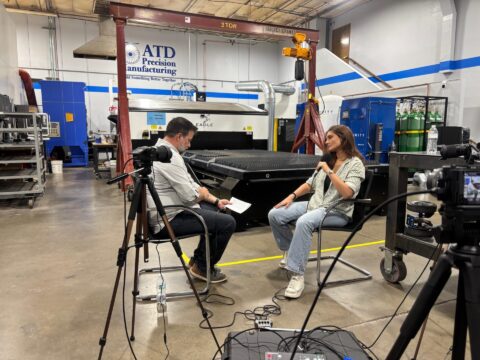

In a recent episode of the Manufacturing Executive podcast, Hoegener shared insights from his journey as a supply chain leader turned recruiter, and offered a nuanced take on where AI can help — and hinder — the hiring process.
The conversation began with a look at how supply chain roles have evolved in recent years. “It’s shifted from being very transactional to being much more strategic,” Hoegener explained. “It’s about using data to drive decisions.” He pointed to the rise of e-commerce, omni-channel strategies, and last-mile delivery as key factors reshaping the skills companies need in their supply chain teams.
AI and automation are really driving the need for tech-savvy talent. But at the same time, soft skills, leadership abilities, change management — those are becoming even more important.
When it comes to applying AI to the recruiting process itself, however, Hoegener urged caution. He recounted recent experiences with candidates who had been screened by AI tools in initial interviews — and who had, in turn, used AI to attend interviews on their behalf.
“Losing that human-to-human interaction is going to cause a lot of problems in the hiring process,” Hoegener warned. “I think on the one side, it’s very disrespectful to the candidates who are committing their time and who are there in person, having them talk to an AI agent.”
He pointed to moves by companies like Google to bring later-stage interviews back in-house and in-person as a way to prevent cheating and ensure a more authentic evaluation of candidates. The core issue, Hoegener argued, is that AI simply can’t pick up on the subtle cues that experienced recruiters use to gauge a candidate’s fit.
There’s so much more you learn during an interview than just the skills and the experience and the answers you get from the candidates. You get their communication skills, their tone of voice. I think a lot of times you can read a lot into that — is a candidate uncertain about their answers? Are they confident in how they give the answer?
That doesn’t mean AI has no place in recruiting, Hoegener emphasized. He highlighted several areas where the technology is already proving valuable: as a “fantastic note taker” that allows recruiters to be more engaged in interviews; as a tool for efficiently summarizing conversations and matching transcripts to evaluation scorecards; and as a way to source potential candidates from vast databases and networks.
Still, Hoegener cautioned that AI’s ability to infer a candidate’s suitability based on limited data points remains hit-or-miss. Job titles, for instance, can mean very different things from one industry or company to the next — a nuance that a human recruiter with deep supply chain experience can readily interpret, but AI can miss.
Looking ahead, Hoegener is hopeful that companies will embrace AI as a complement to, rather than a replacement for, the human touch in hiring. “I very much hope there’s not going to be a trend where we’re trying to replace those human-to-human interactions,” he reflected.
For manufacturers and supply chain organizations looking to build high-impact teams, the takeaway is clear: leverage technology to streamline the process where it makes sense, but don’t underestimate the value of human judgment in identifying the right talent and ensuring the right cultural fit. In the end, that personal connection is what sets the stage for long-term success.
To learn more about Freddy Hoegener and Scope Recruiting’s approach to talent in the supply chain and manufacturing space, visit ScopeRecruiting.com or connect with Freddy on LinkedIn.