
When Jamie Marzili looks at the manufacturing industry, he doesn’t see a sector under siege by job-killing robots. He sees a future where artificial intelligence makes machine shops more efficient, more productive, and more attractive to a new generation of talent.
“I’m an optimist on this,” Marzili said on a recent episode of the Manufacturing Executive podcast. “I actually think this is going to create jobs by creating revenue streams for small to medium businesses that they are then going to begin to hire.”
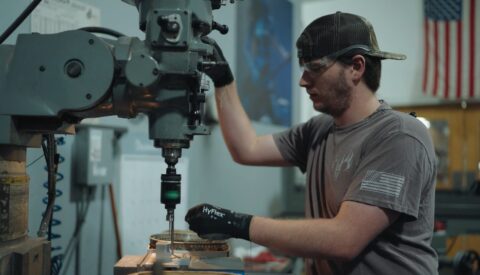
Marzili knows a thing or two about running a successful machine shop. As the founder and president of Marzili Machine Company, he’s grown the business from a 4,000-square-foot garage to an AS9100-certified, 22-person operation serving the medical, aerospace, and defense industries.
But even as his own shop has thrived, Marzili has watched the industry at large struggle with a looming crisis: the loss of tribal knowledge as experienced machinists retire or move on. It’s a challenge he’s tackling head-on through his work with Warp Core AI, a company he founded to build agentic AI systems for manufacturers.
“Don’t think about it as just old people leaving the industry,” Marzili cautioned. “Think about it as the loss of your production manager. Think about it like he’s a young man, right? But he lives in between your ERP, your CRM, and your QMS. He’s the guy that holds everything together when the systems fall apart. And if that guy leaves, he takes a tremendous amount of tribal knowledge away with him.”
What do I see happening in the next five years is I see a renaissance of young people coming back to manufacturing as they start to lose their faith in advanced learning institutions as the narratives now are not, ‘If you don’t go to college, you’re going to be homeless.’ Now it’s, ‘Maybe you shouldn’t go to college, that’s a debt you may never escape from.’
The solution, Marzili believes, lies in harnessing the power of AI to capture and disseminate that knowledge before it walks out the door. At his own shop, that takes the form of an AI assistant that answers machinists’ questions and provides guidance based on best practices — filling in the gaps when more experienced team members aren’t available.
But the benefits of AI go far beyond just preserving institutional memory. Marzili envisions a future where automation frees up human workers to take on more valuable, purposeful roles within the organization.
“What’s going to happen is we are going to begin to superpower certain individuals inside of companies, mostly middle managers,” he explained. “Instead of being very involved in all the microscopic churnings of what happens on the day to day, they will begin doing things like monitoring dashboards, making executive decisions, feeding the AI direction, being a part of like a version of machine learning.”
The result? A more engaged, more fulfilled workforce — and a more profitable bottom line.
“Every single person listening to this has one or two jobs they wish they could fill, but they cannot explain to the boss how they’re going to get an ROI on this,” Marzili said. “And if the company was just flush with cash, nobody cares anymore. Now we can take a risk where right now it’s always got to be about risk management.”
The lines in manufacturing are too thin for you to go out on a limb on anything.
Looking ahead, Marzili sees a bright future for the industry — one where modern, tech-enabled shops become magnets for young talent looking for a viable alternative to the traditional college path.
“As a parent who has children, I’m like, this is a lot safer now for my kids than it was for me when I learned it,” he said. “I think we’re going to see a lot of people kind of gravitating back towards the trade. The wages have come up significantly in the last few years, so now it’s a lot more competitive.”
Of course, realizing that vision will require more than just technological innovation. Marzili acknowledges that the industry still has work to do on the financial side, making it easier for new shops to get up and running in a capital-intensive business.
But he’s convinced that the pieces are falling into place for a true manufacturing renaissance — one where AI isn’t a job killer, but a job creator.
“I think AI is going to make these businesses more attractive to young people,” Marzili said. “It’s going to make them easier for operators and owners to do their jobs and to do it well. I think it’s going to unleash productivity and efficiency that’s going to cause companies that were struggling or hanging on the line, if they can adapt to these things quickly enough, I think that they will see the same kind of growth that our fathers saw as they moved from manual to CNC machining.”
In other words? The future of manufacturing is bright — and it’s powered by AI. The only question is who will be bold enough to embrace it.
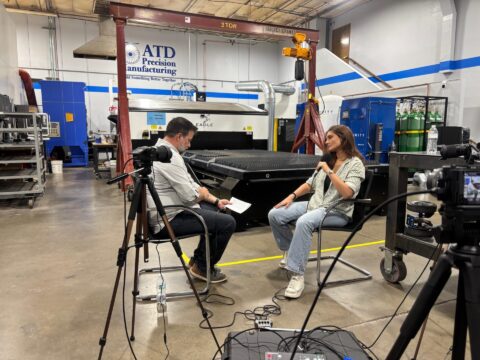
To hear more of Jamie Marzili’s insights on AI, tribal knowledge, and the future of manufacturing, check out his full conversation with Joe Sullivan on the Manufacturing Executive Podcast. And to learn more about Marzili Machine Company’s journey from startup to success story, visit marsmachine.com (that’s Marzili with a “z”).