
As the manufacturing sector grapples with a generational workforce shift and an onslaught of new technologies, it’s easy to get swept up in the hype around artificial intelligence and automation. But according to Rush LaSalle, CEO of Fathom Digital Manufacturing, there’s a dirty little secret behind the industry’s digital transformation: people still matter — perhaps more than ever.
LaSalle brings over three decades of experience in advanced manufacturing, robotics, and digital transformation to his role at Fathom, where his team helps innovators in regulated and high-growth industries accelerate product development and scale production. Throughout his career, he’s seen firsthand how automation can augment and enhance human labor, rather than replace it.
“I started out just really seeing how you can augment manufacturing in all different diversified ways to really help retain jobs here in the industry,” LaSalle explained on a recent episode of the Manufacturing Executive podcast. “And I think that’s the first time I’ve ever done this in the US, because at that point, there was the real argument whether or not automation was taking away jobs. And I can tell you that over 30 years, we’ve found it augmenting and really helping manufacturers.”
The reality is, is they’ve got a ways to go, even with all the AI enablement, and they are making a lot of progress, but it’s very simply these are very, very hard to replicate. So you think about picking up a paper clip — yes, you can look at it, but that tactile feedback, that’s how you pick up a paper clip, and that’s not quite been solved in the humanoid space.
That perspective is particularly relevant as the industry grapples with a looming labor shortage. With some 600,000 open manufacturing jobs today — and projections of 2 million openings within the next five years as the Baby Boomer generation retires — the sector faces an urgent need to both attract young talent and make the most of its existing workforce.
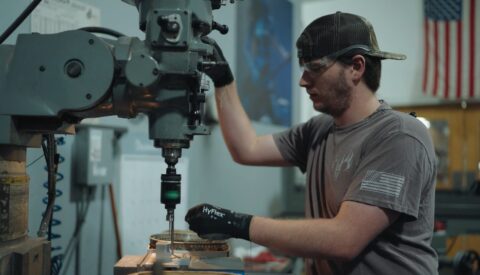
For LaSalle, that starts with recasting the perception of manufacturing as a high-tech, exciting field. He points out that modern factories are filled with robots, vision systems, and AI, often packing more technology per square foot than many Silicon Valley offices. And the work itself, from developing cutting-edge drones to life-saving medical devices to critical infrastructure, offers a level of engagement and impact that many desk jobs can’t match.
But even as manufacturers race to adopt the latest digital tools, LaSalle cautions against losing sight of the human element. The best technology implementations, he argues, are driven from the factory floor, not the boardroom.
I would just say from a manufacturing perspective, don’t forget the human element. The best implementations of technology, whether it’s ERP systems, Joe, whether it’s robotics, whether it’s AI, what have you, has really been driven from the floor. It’s been driven by the teams and not necessarily from the board level down.
That human-centered approach is critical to ensuring the success and scalability of digital initiatives, LaSalle says. While technology is necessary to compete on a global stage, engaging teams in the process — and leveraging their deep domain expertise — can make the difference between a point solution and a transformative impact.
As for the much-hyped prospect of humanoid robots running factories, LaSalle is cautiously optimistic. While he’s excited by the potential at the intersection of AI and robotics, he notes that even the most advanced systems are still in the pilot phase, performing rudimentary tasks. Replicating the dexterity and problem-solving skills of human workers remains a formidable challenge.
Looking ahead, LaSalle sees a future where digital tools augment and enhance human capabilities on the factory floor, not replace them. The manufacturing workforce of tomorrow may look different from it does today — but it will still be distinctly human at its core.
“There is a lot of technology, it needs to be brought to bear to be competitive on a global level,” he reflected. “I think it’s a competitive stage, but if you’re not doing it with a human in the middle of it, your chances of success and then ultimately scaling it from a point level solution to something that’s really going to be impactful on your business and your customers, I think your chances go down dramatically.”
To learn more about Fathom Digital Manufacturing and its work accelerating product development and scaling production for innovators, visit fathommfg.com or follow the company on LinkedIn. You can also connect with Rush LaSalle directly on LinkedIn.