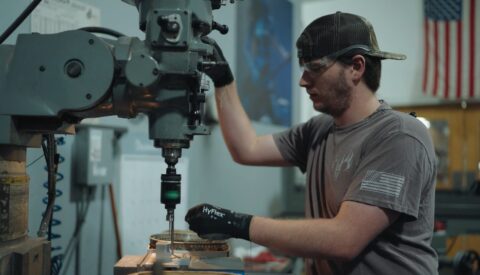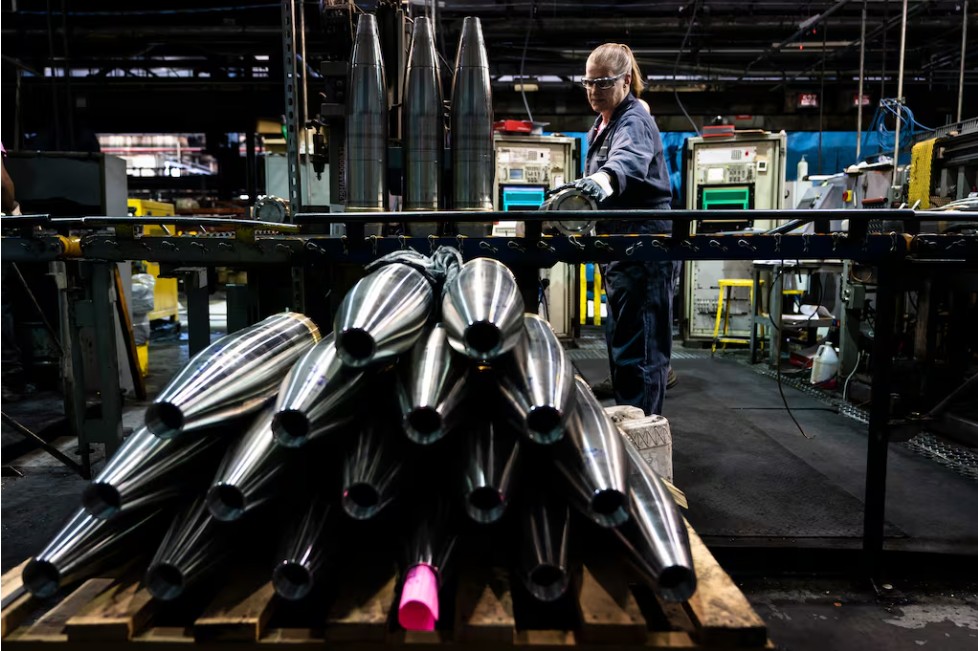

The fundamental challenge facing American manufacturing right now isn’t a lack of capability—it’s a lack of connection.
This week’s data makes that clear. Output is growing modestly, up 0.2% month-over-month and 1.3% year-over-year. Regional indicators like the Philadelphia Fed survey show continued expansion. And yet, most manufacturers are still operating at just 70–80% of capacity. That’s not a demand problem. That’s a coordination problem.
At the same time, costs are rising, delivery times are stretching, and workforce constraints persist. So we’re in this interesting moment where the capacity exists—but the system isn’t fully synchronized to use it. That’s the tension defining this phase of the manufacturing reshoring story.
Manufacturing Is Growing—But Still Running Below Potential
The Story:
U.S. manufacturing output ticked up again in February, rising 0.2%, while the Philly Fed index climbed to 18.1—its third consecutive monthly increase. Despite that, most firms report operating at only 70–80% capacity.
Why It Matters:
We have available capacity across the country that isn’t being fully utilized. That’s 20–30% of potential production sitting idle—not because the machines don’t exist, but because the connections between buyers and suppliers aren’t happening fast enough.
The Bigger Picture:
This is the core friction point in American manufacturing. With roughly 250,000 manufacturers—99% of them small businesses—the challenge isn’t building more factories. It’s helping the existing network work together more effectively. This is a team sport done in community, and right now, too many players are still operating in silos.
Rising Costs and Labor Losses Are Slowing the Transition
The Story:
Input costs are climbing sharply, with the ISM Prices Paid Index hitting 70.5—the highest level since 2022. Supplier delivery times are slowing, and the sector has lost approximately 100,000 jobs since early 2025, even as output edges higher.
Why It Matters:
This is what a transition period looks like. Tariffs and geopolitical pressures are pushing companies to rethink global supply chains, but shifting to domestic suppliers isn’t frictionless. At the same time, labor constraints are limiting how quickly manufacturers can respond.
The Bigger Picture:
Cost pressure alone doesn’t rebuild supply chains—it just creates the incentive. The infrastructure for domestic collaboration still needs to catch up. Until it’s easier to discover, vet, and build trust with new suppliers, reshoring will remain uneven and slower than it could be.
Defense Manufacturing Is Going Distributed
The Story:
The U.S. and its allies expanded their Indo-Pacific industrial partnership to 16 countries, with new initiatives focused on decentralized production of missile systems, drones, and ammunition closer to potential conflict zones.
Why It Matters:
This is a fundamental shift in how we think about industrial resilience. Instead of concentrating production in a few large facilities, the strategy is to distribute it across a network of trusted partners.
The Bigger Picture:
This is exactly how American manufacturing already works at its best. Thousands of small and medium-sized businesses collaborating to build complex systems together. The defense world is now leaning into that model globally. The opportunity is to do the same domestically—unlocking the long tail of capable manufacturers that already exist.
Advanced Manufacturing Investment Continues—But Selectively
The Story:
Bosch opened a new hydrogen production facility in Michigan, focused on developing electrolysis-based hydrogen technologies.
Why It Matters:
Even amid cost pressures and uncertainty, companies are continuing to invest in next-generation capabilities. That’s a signal that the long-term bet on advanced manufacturing in the U.S. remains intact.
The Bigger Picture:
We’re building the future while still trying to optimize the present. The risk is that innovation outpaces the network’s ability to adopt and scale it. Again, it comes back to connection—technology only matters if it’s integrated into a functioning ecosystem of manufacturers.
Closures Highlight Pressure on Certain Segments
The Story:
Stanley Black & Decker announced the closure of a manufacturing facility in Connecticut, citing demand shifts and rising costs.
Why It Matters:
Not every part of the manufacturing sector is benefiting equally from current trends. Some segments—especially those tied to shifting consumer demand—are under real pressure.
The Bigger Picture:
This is not a uniform recovery or a uniform reshoring story. It’s uneven, regional, and sector-specific. The manufacturers that succeed will be the ones that can adapt quickly—finding new partners, new markets, and new ways to stay competitive.
Around the Horn
- NASA’s Artemis II mission is progressing, with the Space Launch System returning to the launch pad ahead of a planned April launch—highlighting the upper bounds of American manufacturing capability.
- A major winter storm disrupted parts of the Midwest and Great Lakes, a reminder of how physical events still impact industrial output and logistics.
- Rising geopolitical tensions are contributing to higher energy prices, adding another layer of cost pressure across manufacturing supply chains.
Looking Ahead
If there’s one takeaway from this week, it’s this: the capacity is already here.
The United States doesn’t need to build an entirely new manufacturing base from scratch. We already have a deeply capable, highly specialized network of small and medium-sized manufacturers across the country. What we need is to make that network more visible, more connected, and more responsive.
We’re still in the first or second inning of a 20–30 year shift toward more localized, resilient supply chains. The constraints we’re seeing now—costs, labor, coordination—are real. But they’re solvable.
The manufacturers who lean into this moment—who invest in relationships, embrace new tools for discovery, and build stronger networks—are going to be the ones who define the next era of American manufacturing.