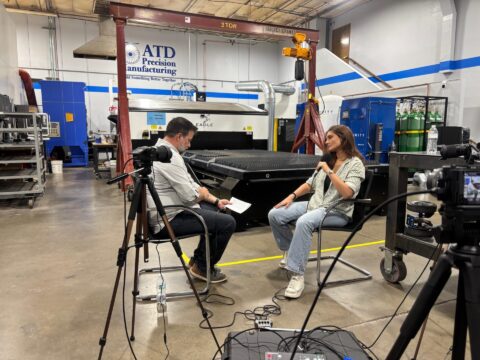

In a recent episode of the Manufacturing Executive podcast, Szmagala argued that manufacturers need to start thinking of government as a key partner, not just a regulator or occasional rescuer.
“It’s always surprising to me when you see a corporation, a manufacturing company, look at their stakeholders,” Szmagala noted. “You’ve got shareholders or the family owners. You’ve got your suppliers, you’ve got your customers, you’ve got your employees, you’ve got your community. These are all important stakeholders, but the government’s a huge stakeholder as well. And oftentimes they’re just kind of ignored — unless you’re in pain.”
That pain usually comes in the form of a restrictive regulation, a tariff, or some other policy that hits the bottom line. But Szmagala argues that by engaging proactively with the government, manufacturers can turn that dynamic on its head. He points to three key roles that the government can play for manufacturers: regulator, funder, and customer.
If you take a step back, government actually affects every enterprise in three ways — admittedly, perhaps in different degrees in each way. Government is a funder, government is a customer, and government is a regulator.
As a regulator, the government sets the rules of the game — but smart manufacturers can shape those rules to their advantage. Szmagala shared the example of Eaton Corporation, which successfully lobbied to include GFCI outlet requirements in building codes, turning a potential regulatory burden into a revenue generator. The key, he says, is to identify regulations that can create market opportunities or raise barriers to entry for competitors, and then engage early in the process to influence the outcome.
Government can also be a valuable source of funding for manufacturers, from incentives for facility expansions and job creation to R&D grants and more. The trick is knowing where to look. Szmagala advises companies to stay plugged into industry associations, local chambers of commerce, and economic development organizations to stay informed about available programs.
And of course, for manufacturers in certain sectors like aerospace and defense, government is the customer — often the biggest one. Navigating the complex world of government procurement can be daunting, but Szmagala says the payoff is worth it. He recommends building relationships with key decision-makers, understanding the intricacies of the process (like small business set-asides), and being prepared to demonstrate value that goes beyond just price.
So how can manufacturers start putting these insights into practice? Szmagala offers a few key tips:
- Start local. Engaging with state and local officials is often easier and more impactful than trying to navigate the federal bureaucracy right out of the gate.
- Leverage strength in numbers. Industry associations and coalitions can be powerful vehicles for collective advocacy on issues that matter to your sector.
- Be strategic about lobbying. Engaging professional lobbyists can be effective, but it’s not always necessary. Start by clearly defining the issue you’re trying to address, then identify the most efficient way to move the needle.
Perhaps most importantly, Szmagala urges manufacturers not to underestimate their own influence. “I’ve never met a member of Congress who will not accept an invitation to tour your plant,” he pointed out. “Manufacturers are loved.”
We need to be less reluctant to use that voice and more willing to engage with the stakeholder that really can add so much value for us.
That engagement doesn’t have to mean writing a blank check, either. Szmagala acknowledges that quantifying the ROI of government affairs work can be tricky — more like measuring the impact of a marketing campaign than a production process. But by providing regular, concise updates on key issues and impacts to internal stakeholders, government affairs teams can build understanding and buy-in across the organization.
The bottom line? In an era of increasing policy complexity and economic uncertainty, manufacturers can no longer afford to treat government as an afterthought. By proactively engaging with government as a regulator, funder, and customer — and by leveraging their considerable political capital — manufacturers can turn a perennial pain point into a powerful source of competitive advantage. The first step is recognizing that their voice matters more than they might think.
To learn more about Terry Szmagala’s work helping manufacturers navigate the intersection of business and government, visit TGSadvisory.com or email Taras@TGSadvisory.com.