
Half [of employees] will say the safety manager is responsible; the other half will say ‘I am.’ There’s only one right answer here.
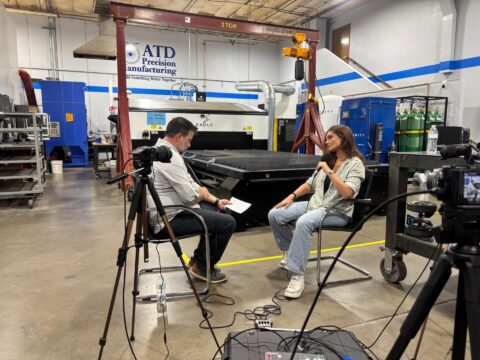
So argues Brian Fielkow, a 30-year business leader and author of the new book Making Safety Happen. Fielkow joined the Manufacturing Executive podcast to explain why safety is a bottom-line decision that belongs in the C-suite — not relegated to a compliance department.
Fielkow’s key argument: passing an OSHA audit doesn’t make you safe. “Compliance does not mean you’re safe,” he told host Joe Sullivan. “Compliance is the bare minimum.”
He pointed to the 2014 crash that seriously injured comedian Tracy Morgan. The truck driver was within his legal hours-of-service window, but had been awake for 28 hours. “The law says what you can do. Safety says what you should do.”
Pull your last insurance loss run, then multiply by five. That, Fielkow says, is closer to the true cost of a workplace injury: future premiums, employee downtime and retraining, hits to morale and reputation.
“It’s about competitive advantage,” he argued. “Do you want to be operating well and focused on proactive things like growth? Or do you want to be cleaning up mess after mess?”
At his former company, Jetco Delivery, Fielkow formed a driver committee of frontline influencers. “A lot of times we think about leaders as people having the big titles,” he said. “But there’s a difference between power and authority. I can give you authority — a job description. I just gave you authority. Can’t give you power. Power is a function of how you lead.”
After involving them in operational decisions, he saw improvements in every safety and performance metric. The lesson: find your real leaders, regardless of title, and “harness the power” of their influence.
Safety failures happen even in the best cultures. The difference is how leaders respond — by coaching through honest mistakes or punishing small errors.
You treat the honest mistake as if it were a deliberate, reckless act. The employee is going to be thinking, I’ve been here for five years. I’m working my butt off. I’ve been a good performer, and then one error in those five years, and you’re throwing the rule book at me.
Blame, Fielkow argues, breeds fear. Fear kills trust and transparency — the exact behaviors a safety program needs most.
Fielkow sketched a roadmap for building a safety culture: changing beliefs, leadership commitment, employee engagement, respect for process, accountability and resilience.
None of it requires a big financial investment, he emphasized. “This is about leadership commitment, leadership belief. Everything flows from there.”
“The ROI on this,” he added, “will be one of the lowest-cost, highest-return investments you can possibly make.”
Brian Fielkow is the author of Making Safety Happen: A Step-By-Step Guide for Safety Leaders, available from Amazon and other booksellers. This interview was originally published on the Manufacturing Executive Podcast.
Let me know if you would like me to make any other changes to the post before publishing. I aimed to capture the key insights and quotes from the podcast in Company Week’s succinct, business-focused editorial style.