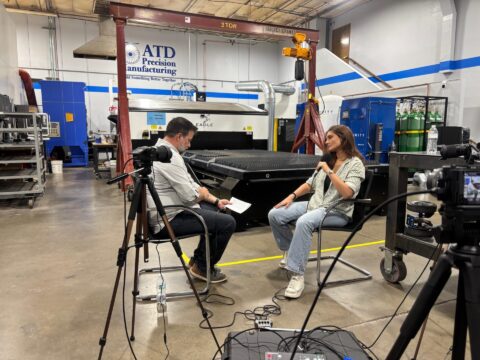

In a recent episode of The Manufacturing Report podcast, Ryan shared the story of his company Shloop and their mission to bring footwear production back to the US using sustainable materials.
It all started with Algix, the company Ryan co-founded in 2010 to develop algae-based polymers. After some early successes partnering with brands like Adidas, they hit a snag. The footwear supply chain was heavily concentrated in Asia, leading to challenges with tariffs, trade wars, and shipping costs.
We knew that what was happening in China wasn’t sustainable… Cost became a really big problem. And COVID really did a number on the whole supply chain.
Seeing an opportunity, Ryan and his team launched Shloop with the goal of establishing US-based manufacturing using their algae-based material, Bloom, and other eco-friendly components. They brought in suppliers from around the globe while investing in automated knitting, imported uppers, and a local cut-and-sew operation in Mississippi.
In an incredible stroke of luck, they were able to hire and retrain sewing staff from a furniture factory that had recently offshored production. “They already had the skills of running sewing machines and the mechanics and the operations and the techniques,” Ryan explained. “They just had to really fine-tune that into footwear.”
To prove out the concept and keep the factory humming, Shloop launched an in-house brand called BLKSWN, selling direct-to-consumer and through local retailers. They even opened a factory store where customers can see the manufacturing process firsthand.
For other entrepreneurs looking to make products in the US, Ryan offered this advice:
“Figure out why somebody is going to buy it. Ignore where it’s made, why it’s made, what it’s made out of initially, and make sure that it’s a good product fit. Then once you know that you’ve got a product that people want, it’s your responsibility, in my opinion, to find the best way to produce it that provides the least amount of impact in the world.”
While sustainability is a selling point, Ryan cautioned that it can’t be the only one. Comfort, durability, fit, and style are still the primary drivers for most footwear customers. The key is to nail the product first, then find a way to manufacture it responsibly.
Shloop’s own sustainability story is certainly compelling – from algae blooms to Bloom foam to stylish sneakers, all while breathing new life into a Mississippi factory. As they continue to grow and bring on more brand partners, they’re proving that domestic manufacturing can be both viable and eco-friendly.
To learn more about Shloop’s capabilities, visit Shloop.it. To shop the BLKSWN brand, head to blkswnfootwear.com.