
Manufacturing Is Expanding—But For Defensive Reasons
The headline number looks good. U.S. manufacturing is still in expansion, with PMI coming in at 52.4 this week. On the surface, that suggests momentum—factories are running, orders are coming in, and the sector is holding up even as the broader economy starts to wobble.
But when you look one layer deeper, a different picture starts to emerge.
A meaningful share of that activity appears to be driven by inventory pull-forward—companies buying early to get ahead of rising costs. That’s not the same as durable demand. It’s a signal that supply chain leaders are bracing for volatility, not betting on stability.
At the same time, energy prices have surged more than 30%, injecting cost pressure into every corner of the manufacturing ecosystem. Hiring is slowing. Broader business activity just hit an 11-month low. And economists are now putting recession odds at ~40%.
This is what a transition period looks like. Manufacturing isn’t contracting—but it is shifting into a more cautious, defensive posture while long-term investment continues in the background.
Manufacturing Expands, But Demand Is Being Pulled Forward
The Story:
U.S. manufacturing activity rose to 52.4 PMI, with regional data showing mixed performance—Kansas City improving while Richmond remained flat. Growth was supported in part by inventory building as companies moved to secure supply ahead of expected price increases.
Why It Matters:
When demand is driven by forward-buying, it creates a temporary lift—but it also introduces risk. If customers are buying now to avoid higher costs later, that can leave a gap in future orders.
The Bigger Picture:
This is a classic signal of a system under pressure. Manufacturers and their customers are adjusting behavior in real time, prioritizing certainty and availability over timing. It’s not a slowdown yet—but it’s not stable growth either.
Energy Shock Ripples Through the System
The Story:
Oil prices jumped more than 30%, pushing input costs sharply higher. Input price indices rose to 63.2, with output prices following at 58.9.
Why It Matters:
Energy isn’t just one line item—it’s embedded across materials, transportation, and production. When it moves this quickly, it compresses margins and forces pricing decisions across the board.
The Bigger Picture:
Manufacturing is a deeply interconnected system, and energy is one of its foundational inputs. This kind of volatility reinforces the need for flexibility—multiple suppliers, shorter supply chains, and the ability to adapt quickly when conditions change.
Hiring Slows as Manufacturers Get Cautious
The Story:
The manufacturing employment index dipped to 49.7, signaling contraction. This marks the first private-sector employment decline in over a year. GDP forecasts have also been revised down to ~1.9%.
Why It Matters:
Hiring is one of the clearest signals of confidence. When manufacturers slow hiring or cut overhead, it reflects uncertainty about near-term demand and cost pressures.
The Bigger Picture:
We’re seeing the early stages of a defensive shift—not a pullback in capability, but a tightening of operations. Manufacturers are protecting margins while trying to maintain readiness if demand holds.
Disruption Is Layering, Not Isolated
The Story:
A partial federal government shutdown is creating operational friction, including TSA staffing shortages that are impacting travel. At the same time, broader business activity has slowed to an 11-month low (51.4 PMI).
Why It Matters:
Manufacturing doesn’t operate in isolation. Travel disruptions affect supplier visits, audits, and coordination. Layer that on top of global instability and rising costs, and complexity compounds quickly.
The Bigger Picture:
This is what modern supply chain risk looks like—not a single disruption, but multiple overlapping pressures. It increases the value of proximity, trust, and strong domestic networks.
Long-Term Investment Continues Beneath the Surface
The Story:
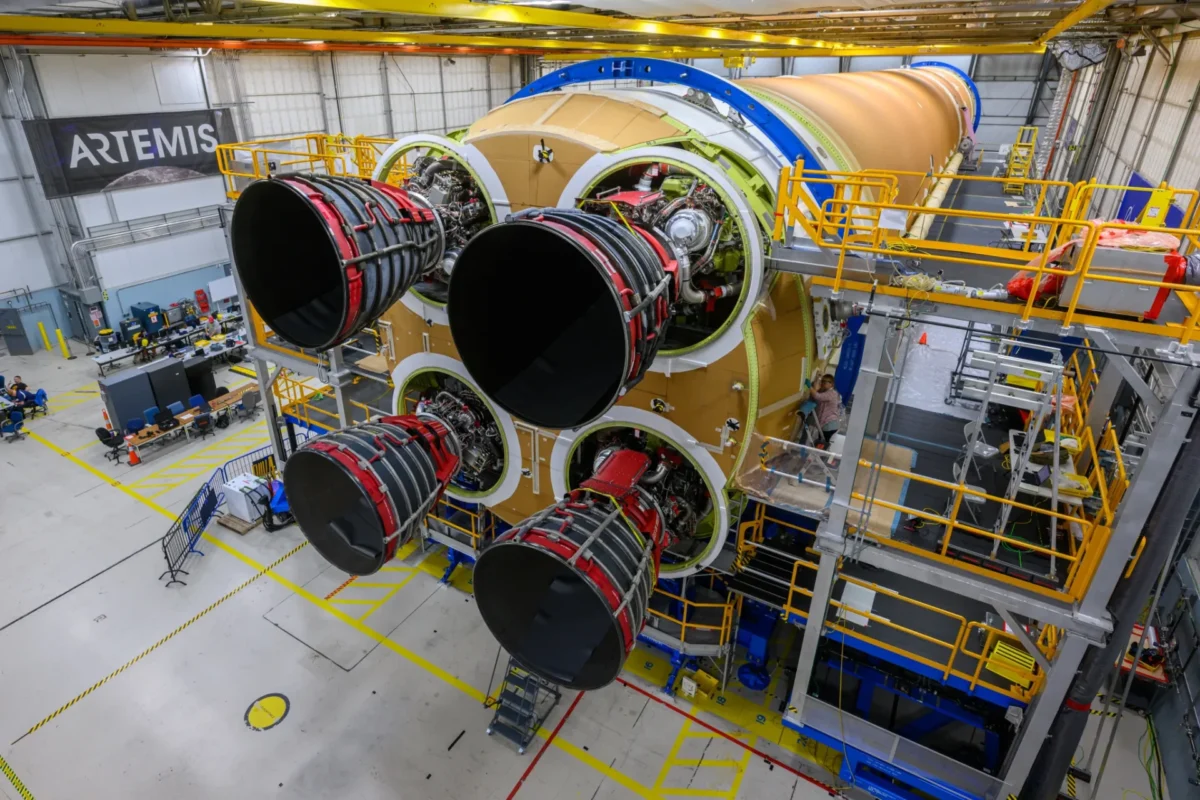
NASA pushed its Artemis moon landing timeline to 2028, while continuing to rely on private-sector partners. Meanwhile, the Roman Space Telescope remains on track for a fall 2026 launch.
Why It Matters:
These programs sustain demand for high-precision manufacturing, advanced materials, and aerospace supply chains—many of which rely on specialized small and mid-sized manufacturers.
The Bigger Picture:
Even as the near-term environment becomes more uncertain, long-term industrial investment is continuing. That’s a critical signal. The foundation for the next decade of manufacturing capacity is still being built.
Around the Horn
- Composite PMI fell to 51.4, an 11-month low, signaling broader economic slowing
- Inflation pressures rising, driven largely by energy cost increases
- Recession probability now estimated at ~40%
- Inventory builds suggest forward-buying behavior across supply chains
- Manufacturing continues to outperform services in the current cycle
The Takeaway
- Manufacturing growth (52.4 PMI) is being driven by inventory pull-forward, not stable demand
- Oil +30% is cascading through costs, pushing inflation toward ~5%
- Employment contraction (49.7) signals a defensive shift, even as long-term investment continues
Looking Ahead
The key question over the next few months is whether this demand holds—or whether we see the air pocket that often follows a pull-forward cycle.
At the same time, energy markets will continue to dictate cost structures, and hiring trends will tell us how confident manufacturers really are.
Stepping back, this fits squarely into what we’ve been talking about: we’re in the early innings of a long-term shift toward more resilient, localized manufacturing. Periods like this—where volatility forces better decision-making—are part of that transition.
The manufacturers who invest in relationships, build flexible supply chains, and stay close to their partners are the ones who will navigate this environment best.
Because at the end of the day, this industry is still what it’s always been—a team sport, done in community.