
Three Key Insights
The semiconductor race is expanding beyond chips. The latest investments aren’t just targeting fabrication facilities. They’re focused on materials, chemicals, packaging, photonics, and supporting technologies that make advanced manufacturing possible.
Physical manufacturing is becoming the foundation of the AI economy. Every AI breakthrough ultimately depends on factories producing semiconductors, lasers, energy infrastructure, and industrial equipment. Digital innovation increasingly starts with industrial capacity.
The reshoring movement is entering an execution phase. More projects are moving from announcements and incentives to production, hiring, and measurable output. That’s a meaningful shift from where the industry was just a few years ago.
If there was a single theme that defined manufacturing this week, it was the growing convergence of industrial policy, artificial intelligence, and domestic production capacity.
Over the past several years, discussions about reshoring and supply chain resilience have often centered on what America needs to rebuild. This week’s headlines increasingly focused on how that rebuilding is taking shape. From a $500 million federal investment in next-generation semiconductor materials to Nvidia-backed manufacturing expansion in Texas and new solar cell production coming online in Georgia, the story is no longer just about plans and announcements. It’s about capacity being built, scaled, and deployed.
What’s particularly notable is where much of this activity is occurring. Texas continues to strengthen its position as a semiconductor and advanced manufacturing hub, attracting investments that span research, component production, and AI infrastructure. Meanwhile, Georgia’s emergence as a center for domestic solar manufacturing highlights a broader trend: strategic industries are increasingly being anchored inside the United States rather than relying solely on global supply chains.
At the same time, the week’s economic indicators provided a reminder that the transition won’t be perfectly linear. Manufacturing activity remains positive, but growth has moderated in some regions. Companies continue balancing investment decisions against economic uncertainty, labor challenges, and shifting global demand. Yet steel production remains above year-ago levels, and major manufacturers continue committing capital to long-term domestic operations.
Taken together, these developments reinforce a reality that often gets overlooked. American manufacturing isn’t being rebuilt through a handful of mega-projects alone. It’s being strengthened through an expanding network of research institutions, suppliers, technology companies, energy producers, and manufacturers working together. That’s the American way—a deeply relational ecosystem of businesses building capacity across industries and regions.
The result is not a short-term trend, but another signal that we’re still in the early innings of a decades-long shift toward greater resilience, optionality, and domestic industrial strength.
America’s Semiconductor Strategy Moves Upstream
The federal government’s decision to award $500 million to SandboxAQ marks an important evolution in America’s semiconductor strategy. Rather than focusing solely on fabrication capacity, the investment targets semiconductor materials, advanced chemicals, catalysts, and alternatives to critical inputs that are often sourced internationally.
For years, discussions around semiconductor competitiveness have centered on fabs. But fabs don’t operate in isolation. They require a complex ecosystem of suppliers, materials providers, equipment manufacturers, and research institutions working together.
That’s why this development matters beyond the semiconductor sector itself. Many of the beneficiaries of a stronger domestic semiconductor ecosystem won’t be household names. They’ll be specialty chemical companies, precision manufacturers, advanced materials suppliers, and the long tail of small and medium-sized manufacturing businesses that support industrial production.
The bigger story is that policymakers increasingly appear to understand that manufacturing leadership requires more than final assembly. It requires strengthening the entire industrial base that makes advanced production possible.
Texas Emerges as Ground Zero for AI Infrastructure Manufacturing
Texas had another strong week in manufacturing news.
Nvidia highlighted a $2 billion expansion with Coherent in Sherman, Texas, where the companies will manufacture indium phosphide lasers used in AI data center infrastructure. The project is expected to create approximately 1,000 jobs, including hundreds of advanced technical positions.
At the same time, Texas A&M continues advancing plans for a major semiconductor research facility supported by hundreds of millions of dollars in investment.
Viewed independently, these announcements are significant. Viewed together, they reveal something larger: Texas is building a complete advanced manufacturing ecosystem.
Research institutions, component manufacturers, technology companies, and infrastructure providers are increasingly clustering together. That’s how durable manufacturing hubs are created. Not through a single factory, but through a network of organizations that support one another and create opportunities for suppliers throughout the region.
As AI investment accelerates, the states that connect research, production, workforce development, and supplier networks most effectively will likely capture disproportionate economic benefits.
Domestic Solar Manufacturing Reaches a Major Milestone
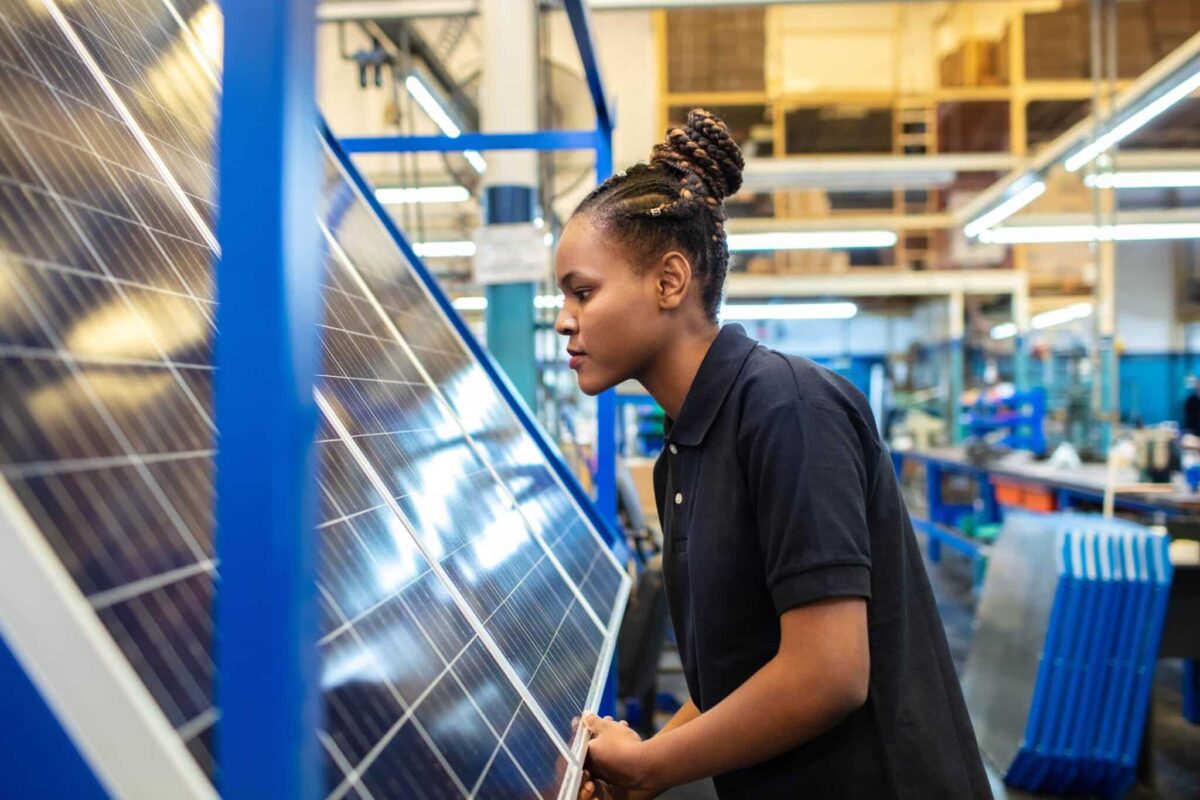
Qcells officially began solar cell production at its facility in Cartersville, Georgia, creating what the company describes as the first vertically integrated solar manufacturing operation in the United States.
The facility brings together ingot, wafer, cell, and module production under one roof—a capability that has largely existed overseas for much of the modern solar industry’s development.
For supply chain leaders, vertical integration matters because it increases visibility, control, and resilience. It reduces dependence on overseas suppliers and shortens response times when disruptions occur.
For American manufacturing, it represents something even broader. It demonstrates that domestic capacity is expanding beyond traditional sectors into industries that will play a major role in future energy infrastructure.
The significance isn’t simply the facility itself. It’s evidence that long-discussed efforts to rebuild strategic manufacturing capabilities are increasingly becoming operational realities.
Manufacturing Growth Continues Despite Signs of Moderation
Not every headline this week pointed to accelerating growth.
The Federal Reserve Bank of New York’s Empire State Manufacturing Survey showed manufacturing activity remained positive in June but expanded at a slower pace than the previous month. New orders and shipments continued to increase, while employment grew for the fifth consecutive month.
Meanwhile, U.S. steel production remains above year-ago levels, with output up more than 6% year-to-date and mill utilization holding above 80%.
Taken together, these indicators paint a picture of an industry that remains resilient even as growth rates fluctuate.
That’s not unusual during major industrial transitions. Manufacturing investments are long-term decisions. Companies build factories, develop suppliers, and train workers based on expectations measured in years and decades—not quarters.
The broader trend remains intact. While growth may vary by region and industry, manufacturers continue investing in domestic capacity, and production levels remain supportive of a longer-term expansion narrative.
Around the Horn
Defense Manufacturing: Boeing and Millennium Space Systems continue expanding satellite manufacturing capabilities as demand grows across commercial and defense markets.
Industrial Policy: Federal tariff policies covering steel, aluminum, copper, and industrial inputs continue influencing sourcing decisions and domestic investment strategies.
Automotive: Jaguar Land Rover reversed previous EV-only production plans and increased emphasis on hybrid vehicle manufacturing while exploring additional North American production opportunities.
Materials & Metals: U.S. steel production remains above prior-year levels, reflecting continued industrial demand despite broader economic uncertainty.
Research & Innovation: Texas continues strengthening its semiconductor research ecosystem through investments in advanced manufacturing infrastructure and workforce development.
Looking Ahead
Several themes bear watching in the weeks ahead.
First, expect continued investment across the semiconductor ecosystem—not just chip production, but the materials, equipment, and supporting technologies that enable it.
Second, AI infrastructure is likely to become an increasingly important driver of manufacturing activity. Every new data center requires a complex network of suppliers producing components, energy systems, and advanced industrial equipment.
Finally, keep an eye on projects moving from announcements to operations. The most important signal in manufacturing today isn’t necessarily the next investment announcement. It’s whether previously announced investments are successfully hiring workers, qualifying suppliers, and producing output.
That’s where America’s manufacturing renaissance will ultimately be measured.
Because the fundamental challenge facing American manufacturing has never been a lack of capability. It’s been connecting and enabling the incredible distributed network of businesses that already exists. With roughly 250,000 manufacturing companies across the country—most of them small businesses—the opportunity isn’t just to build more factories. It’s to help more manufacturers find each other, work together, and strengthen the industrial ecosystem that powers American competitiveness.
This week’s headlines suggest that process is well underway.