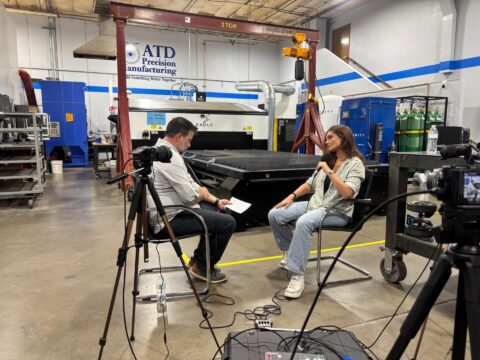

On a recent episode of The Manufacturing Report, host Scott Paul sat down with Caperton to talk about what it took to survive a near-extinction event in American manufacturing and what keeps him investing in a business that most people told him to abandon.
The factory Caperton bought was a mess. The previous owner, Tom Seeley, had built a solid product and a decent customer base, but the operation was running on Depression-era management instincts — every decision funneled through one person who spent a quarter of each year in Florida. The workforce was skilled but demoralized. Women weren’t being paid the same as men. The only feedback anyone received was criticism.
Caperton implemented lean manufacturing and cut lead times, inventory, and debt each in half. But some of the most consequential changes were simpler than that. He painted the walls. He started sharing positive customer feedback with the shop floor. He made equal pay a baseline.
“It’s hard to ask people to make really beautiful furniture in a crappy factory,” he said. The little things added up.
The real test came a few years later. When Caperton bought the business, 90 per cent of the wood furniture Americans purchased was made domestically. By the mid-2000s, that number had cratered to 10 per cent, with Chinese imports — much of it illegally dumped at prices below the cost of raw materials — flooding the market.
Caperton joined a coalition of manufacturers that filed an anti-dumping case against China on wooden bedroom furniture. They proved the case and won tariffs on specific Chinese producers. But he’s quick to say that’s not how Gat Creek survived. The real strategy was relentless differentiation — moving upmarket, investing in quality, and finding a partnership with Room & Board, a retailer that shared Gat Creek’s commitment to American-made products and sustainable materials. That relationship, Caperton says, “helped us truly get through the worst of the worst.”
The numbers tell a striking story about capital investment and survival. In the mid-2000s, the Wall Street Journal profiled Thomasville, then a $200 million furniture company that had spent $1 million on capital expenditures that year. In the same period, Gat Creek was a $14 million company that spent $2 million on new equipment.
Thomasville no longer exists. Gat Creek does.
Capital creates change. Being able to raise the capital and make those types of investments is how we’re able to compete. You just can’t dig a hole faster or build something faster. You really need the technology to help make people truly productive.
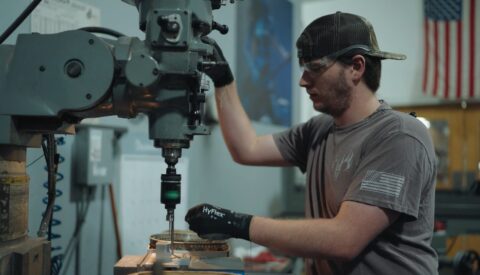
Today the factory runs sophisticated CNC machinery alongside its craftsmen. Caperton sees the technology not as a replacement for people but as the reason he can keep employing them. Robots in a growing business, he argues, create more jobs than they displace. The key word is growing.
Caperton is clear-eyed about what Gat Creek means to Berkeley Springs beyond the payroll. The factory’s workers are also the town’s volunteer firefighters, Sunday school teachers, and soccer coaches. When factories close in rural communities, they don’t just take jobs — they take the civic infrastructure that holds a small town together.
Nearly all of Gat Creek’s inputs are domestic. The factory sits in the geocenter of the Appalachian Forest, which Caperton points out is growing trees 2.8 times faster than they’re being harvested — “the most successful forest in the world.” Every piece of furniture built there is one that didn’t get manufactured in a country with lower environmental standards and shipped across an ocean on bunker fuel.
On tariffs and trade policy, Caperton is supportive but measured. He believes allowing China into the WTO in 2001 eroded the U.S. industrial base to a dangerous level and welcomes efforts to address it. But he’s not painting in absolutes.
Terms are going to change, they’re going to change again. And there’s some that are unfortunate. But what we’re working towards is important. And I’m happy we’re working towards it.
Asked when he felt like Gat Creek had finally made it, Caperton laughs. “When it comes, I’ll tell you, partner.” He says the most successful people he’s known are the ones who never believe they’ve arrived — who show up every day and make it every day.
It’s been 30 years. He’s still married, still in debt, and still making furniture in West Virginia. By his own accounting, that qualifies as success.