
In the global contest for manufacturing supremacy, China is outpacing the United States in a critical area: industrial robotics. Despite facing higher labor costs and persistent worker shortages, American factories are adopting automation far more slowly than their Chinese counterparts.
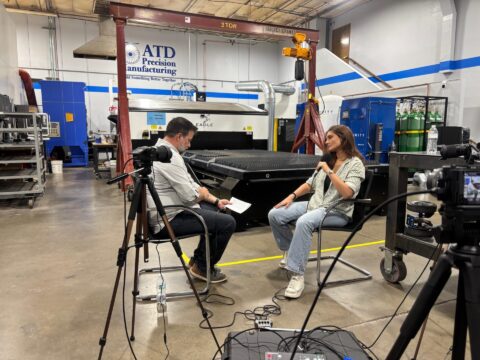
To understand this paradox, Company Week sat down with Rishabh Agarwal, co-founder and CEO of Peer Robotics, a startup specializing in collaborative mobile robots. Agarwal, who comes from a family of small-scale manufacturers in India, has spent his career researching human-robot interaction at top institutions like IIT Delhi, the University of Maryland, and Siemens in Germany.
The US-China robotics gap, Agarwal explains, stems from a combination of factors. Many small and medium-sized US manufacturers aren’t aware of the latest automation technologies. They perceive robotics as prohibitively expensive and complex, requiring massive facility overhauls. Inertia and resistance to change also play a role.
China, meanwhile, enjoys several key advantages. The government provides generous support and incentives for the adoption of automation. A robust ecosystem of robotics suppliers and integrators has emerged. And crucially, Chinese manufacturers of all sizes are proactively embracing the technology.
Naturally you would imagine US would be a place where there would be way more robot deployments than China, because China’s labor is cheap and then also there is no shortage of people, there are massive populations still, right?
But Agarwal insists that US manufacturers, particularly small and mid-size firms, can close the gap. The key is taking a practical, incremental approach — what he calls “brownfield” automation. Start small, prove the ROI, and scale gradually.
Identifying low-hanging fruit is a great first step. Look for repetitive, labor-intensive tasks, areas with high turnover or injury rates, and opportunities to reduce quality control issues and rework. Leverage grant programs from organizations like the Manufacturing Extension Partnership (MEP) and explore flexible pricing models like Robotics-as-a-Service to minimize upfront costs.
For small manufacturers, Agarwal argues, the urgency of automation is especially acute. They compete directly with larger firms for labor but struggle to match the wages, benefits, and growth opportunities of bigger players. As the worker shortage intensifies, SMEs will feel the squeeze first.
Finding those areas that like talking to the team, right? What do you don’t want to do? But someone has to do it, but yeah, what do you don’t want to do no matter what, right? So sometimes those are the things that is easiest to adopt because everyone in the team would be motivated to automate the task.
So where should manufacturers begin their automation journey? Agarwal offers three pieces of advice. First, consult your local MEP center for a facility assessment and information on grant programs. Second, engage your frontline workers to identify their biggest pain points and gather ideas. And third, reach out to robotics OEMs and integrators for site visits and project proposals.
The key is to start small, but start now. Building automation capabilities takes time, but the sooner manufacturers begin, the better positioned they’ll be to navigate the labor challenges ahead. A growing ecosystem of automation partners stands ready to help.
“Reach out to any of those system integrators in the area or OEMs,” Agarwal advises. “They would be more than willing to come make a trip, understand your operations, and provide feedback.”
The robotics race is on, and China has the early lead. But with a little creativity and a lot of determination, US manufacturers can still close the gap — one “brownfield” automation project at a time.
To learn more about Peer Robotics and their collaborative mobile robot solutions, visit peerrobotics.ai or contact Rishabh Agarwal directly at rishabh.agarwal@peerrobotics.ai.