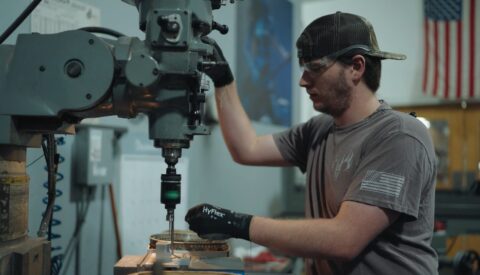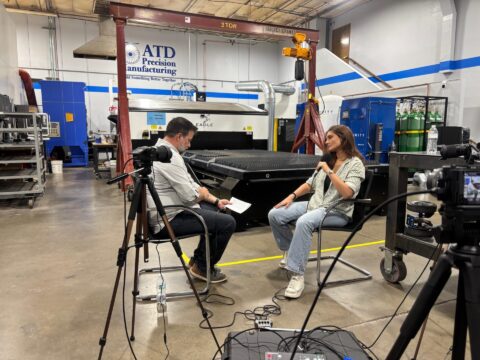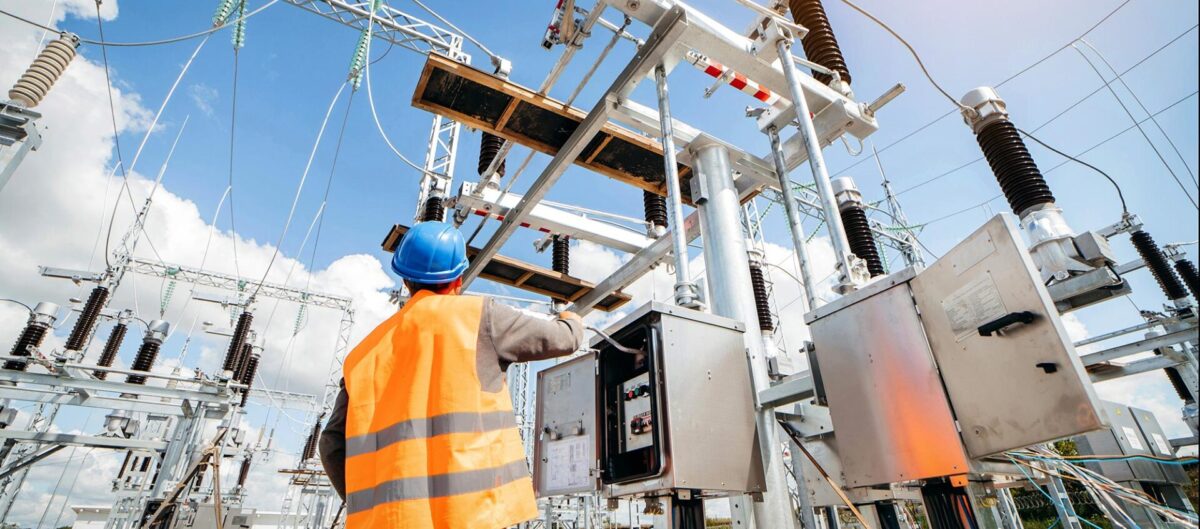

For years, the conversation around American manufacturing centered on what we had lost—factories moved offshore, supply chains stretched across oceans, and critical industrial capabilities concentrated in places increasingly outside our control. This week offered a reminder that the more important story may be what we’re rebuilding.
The biggest headline came from the factory floor itself. U.S. manufacturing activity reached its highest level in four years during May, while manufacturers added jobs and companies continued making long-term bets on domestic production capacity. At the same time, major investments in semiconductors, energy infrastructure, and strategic materials continued to move forward across the country.
The common thread running through nearly every story this week is that resilience has become a permanent feature of manufacturing strategy. Whether it’s chip production, industrial equipment, or critical materials, companies are investing closer to home and building supply chains designed for optionality rather than just efficiency.
Three Numbers That Matter
54.0 — Manufacturing PMI reached its highest level in four years.
$55 Billion — Planned first-phase investment in Texas semiconductor manufacturing.
7,000 — Manufacturing jobs added during May.
Manufacturing Activity Hits a Four-Year High
The Institute for Supply Management reported that manufacturing activity expanded to a PMI of 54.0 in May, the strongest reading in four years. Even more encouraging, growth wasn’t concentrated in a single sector. Sixteen manufacturing industries reported expansion, while new orders, production, and backlogs all moved higher.
Manufacturing employment also increased by 7,000 jobs during the month, led by gains in fabricated metal products.
Why does this matter? Because sustainable manufacturing growth doesn’t come from a handful of headline-grabbing projects. It comes from thousands of businesses finding work, hiring people, and investing in equipment. The strongest signal from this report is that activity appears to be broadening across the industrial economy rather than remaining isolated to a few sectors.
For manufacturers that have spent the past several years navigating inflation, labor shortages, and supply chain disruptions, this is one of the clearest indications yet that demand remains resilient.
The Semiconductor Buildout Continues
The race to rebuild domestic semiconductor production took another step forward this week as local officials in Texas approved a long-term incentive package supporting SpaceX’s planned Terafab semiconductor facility. The first phase of the project alone is expected to represent roughly $55 billion in investment.
Meanwhile, Micron continues expanding memory manufacturing in Virginia as part of its broader U.S. investment strategy.
While every semiconductor announcement attracts attention because of its size, the more important story may be what these projects represent. Advanced manufacturing capacity is increasingly being viewed as strategic infrastructure. Semiconductors are embedded in everything from automobiles and industrial equipment to defense systems and consumer electronics.
The companies and regions investing in these capabilities today are positioning themselves at the center of the next generation of American manufacturing growth.
Industrial Investment Is Expanding Beyond Chips
Semiconductors weren’t the only sector generating investment news this week.
Siemens announced it has now reached $1 billion in U.S. manufacturing investments over the past five years, supporting projects across Pennsylvania, Illinois, and Texas. Jabil announced a new Virginia facility that will manufacture power distribution equipment supporting America’s growing energy infrastructure needs. Century Aluminum continues ramping production at its South Carolina smelter, increasing domestic primary aluminum output.
Taken individually, these announcements may seem unrelated. Viewed together, they tell a different story.
Manufacturing investment is spreading across multiple layers of the industrial economy—from energy infrastructure and industrial equipment to critical materials and advanced technologies. That’s exactly what a healthy industrial ecosystem looks like. Not one dominant industry, but a network of specialized manufacturers building the capabilities that support one another.
Trade Policy Remains a Major Variable
Trade policy remained active this week as the White House announced modifications to certain steel and aluminum-related tariffs while the U.S. Trade Representative proposed new Section 301 tariffs covering imports from dozens of economies.
Manufacturers continue to face the challenge of balancing cost, resilience, and supply security. That’s particularly important as many companies report ongoing shortages of steel, aluminum, semiconductors, and other industrial inputs.
For sourcing teams, the conversation is increasingly shifting beyond simple cost comparisons. The question is no longer just who can provide the lowest price. It’s who can reliably deliver when markets, geopolitics, or transportation networks become unstable.
That shift may ultimately become one of the defining characteristics of this manufacturing cycle.
Around the Horn
Workforce Watch: Manufacturing added 7,000 jobs in May, with fabricated metals leading gains.
Energy Infrastructure: Jabil’s new Virginia facility will support growing demand for electrical equipment and grid modernization.
Strategic Metals: Century Aluminum’s expansion is expected to increase U.S. primary aluminum production by roughly 10%.
Supply Chains: Manufacturers continue reporting shortages and cost pressures affecting steel, aluminum, semiconductors, and transportation inputs.
Advanced Manufacturing: Texas and Virginia remain among the leading destinations for major semiconductor investments.
Looking Ahead
The strongest signal from this week’s news wasn’t any single factory announcement. It was the combination of rising factory activity, growing employment, and continued capital investment across multiple sectors.
That’s important because manufacturing strength has never come from a handful of giant facilities. America’s advantage has always been its long tail of small and medium-sized manufacturers—thousands of businesses working together to build what the country needs.
The companies investing in relationships, capabilities, and domestic production today are positioning themselves for what increasingly looks like a decades-long shift toward more resilient and localized supply chains. We’re still in the early innings, but the direction of travel is becoming harder to ignore.