
American manufacturing enters the final stretch of October with a different set of challenges than the investment headlines that have dominated recent weeks. New data point to strong demand in several markets, but higher input costs, slower supplier deliveries, and growing price sensitivity are complicating production decisions. At the same time, long-term commitments to domestic materials and industrial equipment show that companies are still willing to invest in the foundations of manufacturing.
This week, U.S. Steel approved nearly $3 billion for a major steelmaking modernization project in Pennsylvania, while Apple committed up to $100 million to source titanium from a domestic producer. New business surveys also suggest that manufacturers are facing a difficult balancing act: fulfilling orders while managing inflation and protecting margins. These developments shift the focus from the number of factories being announced to the economics of keeping American production competitive.
Main Stories
1. Manufacturing Demand Holds Up as Costs and Delivery Times Worsen
S&P Global’s flash U.S. Composite PMI Output Index slipped to 57.6 in October from 58.4 in September. Although the broader measure of private-sector activity eased, manufacturing strengthened, helping offset a modest slowdown in services. New orders reached 58.2, their highest reading since March 2022, as domestic demand, inventory building, and export growth supported business activity.
The challenge is that stronger demand is arriving alongside renewed cost pressures. The survey’s output-price index rose to 59.8, its highest level since August 2022, while supplier delivery performance deteriorated to its weakest reading in more than four years. Manufacturers’ input prices remained elevated at 64.9, close to four-year highs. Factory employment also reached its highest level since March 2012 as manufacturers sought to expand capacity.
Why it matters: Strong orders do not automatically translate into stronger profitability. Manufacturers must secure materials, manage longer lead times, and decide how much of their higher costs they can pass on to customers. Businesses that cannot adjust prices quickly enough risk seeing margins narrow even while production remains busy.
For smaller manufacturers, the immediate priorities are likely to include tighter cost tracking, more frequent communication with suppliers, and careful decisions about inventory. The latest survey suggests that the next phase of manufacturing growth may depend as much on operational discipline as on customer demand.
2. U.S. Steel Commits Nearly $3 Billion to Modernize Pennsylvania Operations
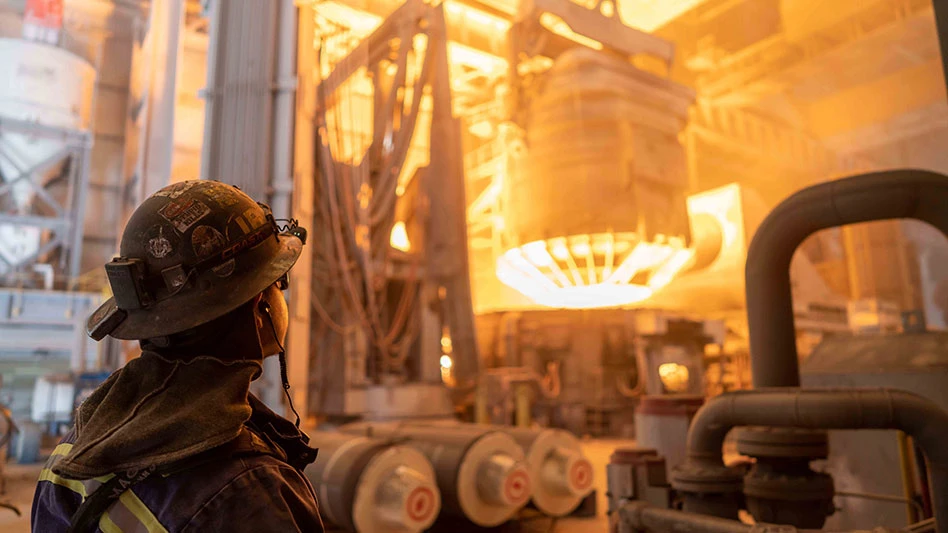
U.S. Steel’s board approved full funding on October 22 for a nearly $3 billion hot strip mill at its Edgar Thomson Plant in the Mon Valley near Pittsburgh. The project will replace aging equipment and increase the facility’s annual production capacity from approximately 2.2 million tons to 3.5 million tons. Initial production is expected in late 2029, following the necessary permitting process.
A hot strip mill converts steel slabs into thinner coils used in vehicles, appliances, construction materials, and other manufactured products. The planned equipment includes new walking beam furnaces and an in-line slab sizing press. According to the company, the modernization will reduce fuel consumption and scrap while eliminating a production step and expanding the range of steel products it can manufacture.
The company also expects the investment to support thousands of jobs across Pennsylvania and generate up to $1.7 billion in economic impact over three years.
Why it matters: The project is significant not simply because of its price tag, but because it targets the productivity and capabilities of an existing industrial operation. Replacing aging equipment can improve efficiency, reduce waste, and give manufacturers more flexibility to meet customer specifications.
It also illustrates the long time horizons involved in heavy industry. With production not expected until late 2029, the project will require sustained execution through permitting, construction, installation, and commissioning. Its eventual value will depend on whether the upgraded facility can deliver reliable output at competitive cost.
For customers that rely on domestic steel, the modernization could expand available product options and strengthen a critical upstream source of material. For the region, it represents a major commitment to maintaining steelmaking as a long-term industrial capability.
3. Apple’s Titanium Commitment Supports a Domestic Materials Supplier
Apple announced on October 20 that it had committed to purchasing up to $100 million in titanium over three years from Pennsylvania-based Perryman Company. The agreement is part of Apple’s American Manufacturing Program and will support titanium used in several products, including its planned foldable iPhone.
Perryman will melt, forge, and roll titanium containing at least 80% recycled content at its Houston, Pennsylvania, site. The agreement gives the materials producer a defined customer commitment while supporting Apple’s effort to source more components from U.S. companies.
Apple also reported that nearly 100 components in its iPhone Duo and iPhone 18 Pro are produced by American companies across more than a dozen states. Its wider manufacturing program includes domestic chip production, cover glass, and other components, reflecting an effort to expand the range of products and materials sourced from U.S. suppliers.
Why it matters: Domestic manufacturing depends on more than final assembly. It also requires access to the metals, specialty materials, components, and processing capabilities that go into finished products. Customer commitments can help suppliers plan production, justify equipment investments, and develop specialized capabilities.
The recycled-content requirement adds another dimension. Materials recovery can reduce dependence on virgin inputs, although the commercial benefits depend on reliable feedstock, processing costs, and the ability to meet demanding quality specifications.
For manufacturers, the announcement highlights the value of securing customer relationships early and developing capabilities that align with specific product requirements. A purchase commitment is not the same as a new factory, but it can help anchor demand for domestic production.
Quick Hits
- Cutting-tool shipments remain well above last year: U.S. manufacturers took delivery of $278.6 million in cutting tools in August, up 32.2% from August 2025. Shipments for the first eight months of 2026 totaled $2.03 billion, a 22.4% increase year over year. The figures reflect both inflation in raw materials and underlying demand for machining across industrial sectors.
- Kansas City Fed finds continued expansion, but growing price sensitivity: The Tenth District manufacturing composite index eased to 11 in October from 14 in September, remaining in expansion territory. Expectations for future activity improved to their highest level since July 2022, but raw-material prices continued to rise. The survey found that 53% of respondents said customers were somewhat or much more sensitive to price changes than six months earlier, while 16% said they could not pass higher costs on to customers.
- Metal buyers prioritize supply certainty: Industry reporting this week indicated that metals producers are seeing healthy demand and limited supply in some categories, creating room for further price increases. For manufacturers that purchase steel and other industrial metals, securing dependable supply may be becoming as important as negotiating the lowest price.
The Bottom Line: Productivity and Cost Control Will Shape the Next Phase
This week’s developments reveal a manufacturing landscape in which demand remains resilient but operating conditions are becoming more complicated. Strong new orders and increased purchases of cutting tools suggest that industrial activity has a solid foundation. Yet rising input prices, slower supplier deliveries, and customers’ growing sensitivity to price are creating new pressure on margins.
U.S. Steel’s Pennsylvania investment demonstrates the long-term commitment required to modernize heavy industry, while Apple’s titanium agreement shows how customer purchasing decisions can support domestic materials processing. Both developments point to the importance of strengthening the capabilities behind finished products.
For manufacturers, the immediate challenge is converting demand into profitable, dependable production. That requires more than capacity: it calls for efficient equipment, careful materials planning, reliable supplier relationships, and the ability to deliver quality without allowing costs to outrun revenue.
The competitive advantage will belong to manufacturers that can manage those fundamentals while investing for the future.