
American manufacturing is heading into the fall with a pretty clear signal: the factories are getting busier.
The Institute for Supply Management’s September Manufacturing PMI came in at 54.5, marking the ninth consecutive month of expansion. New orders accelerated, employment moved higher, and backlogs grew. The S&P Global manufacturing PMI was even stronger at 57.0, its highest level in 52 months.
But there is another side to the story. Prices are rising, supplier delivery times are lengthening, and regional manufacturing performance remains uneven. The expansion is real, but it is not frictionless.
At the same time, something bigger is happening underneath the monthly data. Companies are putting billions of dollars into American production capacity—from steel and tires to pharmaceuticals, aerospace, advanced manufacturing and construction equipment.
The result is a manufacturing story that increasingly looks less like a single reshoring boom and more like a network of investments building capacity across the country.
1. The Factory Floor Is Getting Busier
The headline number is hard to miss: 54.5 on the September ISM Manufacturing PMI, with manufacturing expanding for the ninth straight month. New orders rose to 55.3, employment reached 52.7, and backlogs increased to 56.4.
The S&P Global survey tells a similar story, with its manufacturing PMI reaching 57.0, a 52-month high. Factory production accelerated at its fastest pace since April 2022, while new-order growth reached a more-than-four-year high.
There are some yellow flags. ISM’s Prices Index jumped to 77.9, up from 71.1 in August, and the survey reported shortages involving electrical components, electronic components, steel and other industrial inputs.
The regional picture is also mixed. Kansas City manufacturing accelerated, while Philadelphia and Richmond reported slower activity.
That combination matters. American factories are expanding, but manufacturers are doing it while managing higher costs, constrained inputs and very different regional conditions.
For the small manufacturer, this is where the rubber meets the road. More orders are good news. Finding the people, materials and trusted suppliers needed to fulfill those orders is the next challenge.
2. AI Is Becoming a Manufacturing Demand Engine
AI may be a software story, but increasingly it is becoming a very physical manufacturing story.
U.S. orders for non-defense capital goods excluding aircraft rose 1.6% in August, while equipment spending has posted two consecutive quarters of double-digit growth. The September ISM report specifically identified AI infrastructure investment as one source of manufacturing demand.
That demand is showing up in factories and construction equipment.
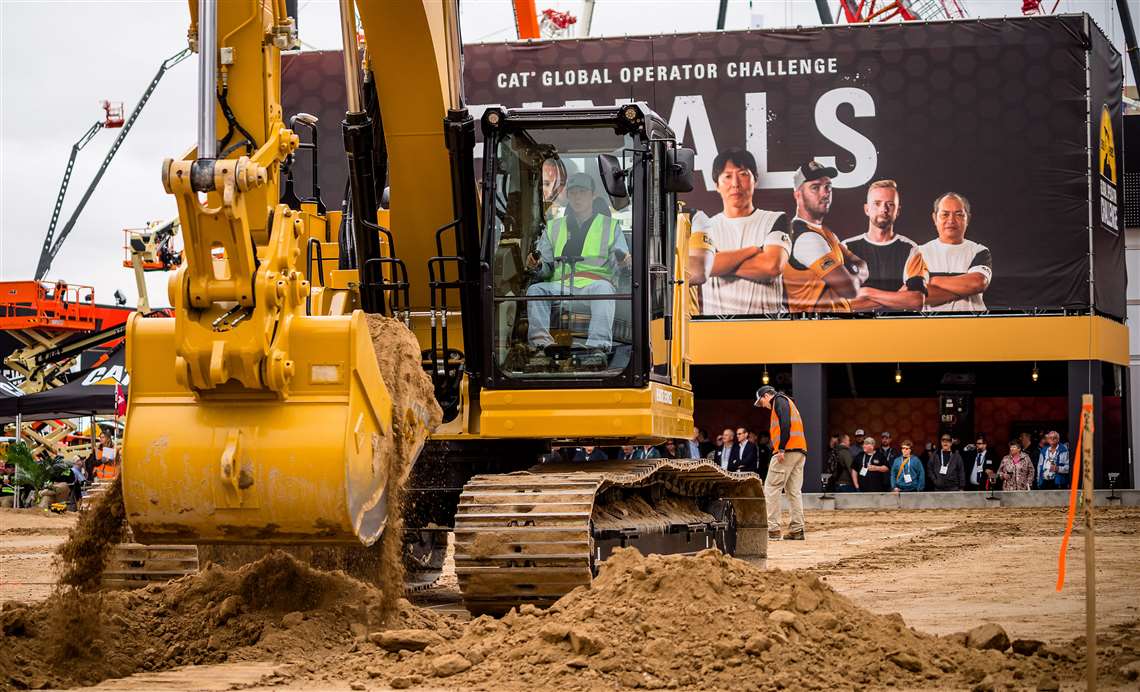
Caterpillar announced plans to invest approximately $1 billion in North Carolina to expand compact-equipment manufacturing, including a new facility in Sanford. The company says the investment will increase production of compact track loaders and telehandlers.
Genentech is taking a similar approach from a different industry. Its $750 million expansion in Hillsboro, Oregon, will add 211,000 square feet and approximately 250 high-wage jobs combining manufacturing expertise with digital skills in AI, automation and robotics.
And IMTS 2026 provided a useful snapshot of where manufacturing technology is heading. The show attracted 91,295 registrants, 1,788 exhibiting companies and more than 1.17 million square feet of exhibit space, with AI and automation among the major themes.
The important point is that AI does not eliminate the physical industrial base. In many cases, it increases the amount of physical infrastructure required around it.
3. The Domestic Capacity Buildout Is Getting Bigger
This week’s investment announcements make one thing clear: domestic capacity is being added across a remarkably broad range of industries.
Pirelli announced approximately $1.2 billion for its Rome, Georgia, operation, with production capacity expected to reach 6 million tires annually by 2033 and roughly 1,000 new jobs. Pirelli explicitly described the project as part of its “local-for-local” strategy and an effort to strengthen supply-chain resilience.
Amazon announced more than $100 million for a 585,000-square-foot advanced manufacturing facility in Greenwood, Indiana, expected to create 300 manufacturing and engineering jobs. The facility will produce products supporting Amazon’s fulfillment and robotics network across North America.
Genentech is investing $750 million in Oregon. Avio is building a more than $500 million, approximately 900,000-square-foot facility in Virginia expected to create more than 1,500 jobs and manufacture solid rocket motors for defense, tactical propulsion, missile systems and commercial space.
Collins Aerospace is adding 14,000 square feet to its West Des Moines facility, which currently ships more than 25,000 engine nozzles per month and supports commercial and military aviation programs.
The numbers are impressive, but the more important pattern is the distribution.
This is not one company building one enormous factory and solving American manufacturing by itself. It is dozens of companies adding capabilities in different regions and industries.
And every one of those facilities depends on a broader ecosystem of suppliers, machine shops, fabricators, engineers, logistics providers and skilled workers.
That distributed network is the real industrial base.
4. Steel Is Back at the Center of the Supply-Chain Conversation
Steel offers perhaps the clearest example of the connection between domestic capacity and global supply-chain strategy.
Mesabi Metallics announced an $18 billion investment combining its Minnesota iron-ore mine with a new steel complex in Iowa. The company says the project will create more than 8,000 permanent and construction jobs, with the first phase of the Iowa facility planned for 7.5 million tons of annual steel production.
At the same time, steel overcapacity was a central issue at the G20 Trade Ministerial in Milwaukee.
The Global Forum on Steel Excess Capacity reached consensus on the Milwaukee Framework, establishing a framework for joint action on global steel excess capacity and the market distortions associated with it.
The U.S.-China Board of Trade also announced recommendations covering $30 billion of non-sensitive goods on each side that could receive more favorable tariff treatment in the future.
For manufacturers, these developments point to a larger question: how much should supply chains optimize for the lowest possible cost, and how much should they value optionality and domestic capacity?
There is no simple answer. But the fact that governments and manufacturers are investing billions to address supply-chain vulnerabilities shows that the question has changed.
Around the Horn
- Magnets: Magnet Applications expanded its Pennsylvania footprint with a new 40,000-square-foot facility to support domestic permanent-magnet manufacturing.
- Defense manufacturing: Avio’s new Virginia facility adds substantial U.S. solid-rocket-motor capacity for defense and commercial space.
- Aerospace: Collins Aerospace’s Iowa expansion adds capacity for commercial and military aviation programs.
- Manufacturing technology: IMTS brought more than 91,000 people together around AI, automation and advanced manufacturing.
- Regional divergence: Kansas City manufacturing accelerated while Philadelphia and Richmond reported slower activity, underscoring that the national expansion is not uniform.
- Trade: The G20 Trade Ministerial put structural excess capacity, forced labor, food trade and the future of the Most-Favored-Nation principle on the agenda.
The Bigger Picture
Taken together, these stories tell a fairly straightforward story.
American manufacturing is adding capacity.
The investment is coming from different directions: AI infrastructure, domestic supply-chain resilience, defense demand, pharmaceuticals, transportation, steel and advanced manufacturing. The geography is equally broad, stretching from Georgia and Indiana to Iowa, Oregon, Virginia and North Carolina.
The interesting part is what happens between those factories.
A $1 billion facility does not operate in isolation. It needs hundreds of suppliers. It needs specialized machine shops. It needs maintenance providers, logistics companies, engineers and skilled workers. It needs relationships.
That is where the long-term manufacturing opportunity gets particularly interesting.
The United States does not need to replicate a vertically integrated factory model to rebuild industrial strength. It can lean into its own advantage: thousands of entrepreneurial businesses working together as a network.
The data suggest that network is getting busier.
The question for the next phase of the manufacturing renaissance is how effectively those businesses can find one another, build trusted relationships and turn this wave of investment into durable domestic capacity.
That is a twenty- or thirty-year project, not a quarterly one. But this week’s numbers suggest the work is well underway.