
American manufacturing is sending a mixed signal this week. Factory output is growing, companies are investing in strategic production, and new projects are bringing advanced technologies into the industrial landscape. But the numbers also reveal an uneven recovery—and a reminder that adding capacity is only part of the work required to strengthen America’s manufacturing base.
From automotive suppliers in South Carolina to defense production in Texas and advanced materials in New Mexico, this week’s announcements show companies building for the future. Other investments in computing infrastructure, semiconductor equipment, and workforce training reinforce the same point: manufacturing competitiveness depends on more than a new building or a piece of equipment. It depends on the suppliers, skilled workers, technology partners, and customer relationships that make production possible.
Main Stories
1. Factory Output Rebounds, but the Recovery Is Uneven
U.S. manufacturing output rose 0.3% in September, following a revised 0.2% decline in August, according to Reuters. Output was up 1.1% from a year earlier, but third-quarter manufacturing growth slowed to a 0.7% annualized rate, compared with 5.6% in the second quarter. The sector’s performance varied sharply: semiconductor production surged 28.4% in the quarter, while motor vehicle and parts output fell 3.0% in September.
Regional surveys tell a similarly nuanced story. The New York Fed’s Empire State Manufacturing Survey rose to 25.5 in October from 7.6 in September, indicating stronger regional activity. Meanwhile, the Philadelphia Fed’s current activity index fell from 37.8 to 20.9, although it remained in positive territory. Philadelphia respondents also continued to report rising prices.
Why it matters: National manufacturing numbers can obscure the conditions individual businesses face. A supplier serving a fast-growing semiconductor market may be experiencing a very different environment from one tied to automotive or agricultural equipment. For smaller manufacturers, understanding customer demand, cost pressures, and changing order patterns is more useful than relying on a broad recovery narrative.
The bigger picture is that resilience requires visibility across the industrial base. Stronger domestic manufacturing means not only growing output, but also helping businesses anticipate demand, manage risk, and remain dependable partners through changing market conditions.
2. Scout’s Supply Chain Expands Alongside Its Vehicle Ambitions
Seven automotive suppliers announced more than $82 million in investments and over 200 expected jobs across South Carolina’s Upstate region to support production for electric vehicle maker Scout Motors. The investments span Duncan, Piedmont, and Spartanburg, extending the regional supplier network around the automaker’s plans.
The announcements offer a useful illustration of how manufacturing projects ripple through a regional economy. Vehicle production requires a network of component manufacturers and other specialized businesses operating to demanding standards for quality, timing, and cost. The strength of that network can influence how effectively a major manufacturer brings a product to market.
Why it matters: The impact of a large manufacturing investment is not measured by the assembly operation alone. It also depends on the capacity and reliability of the businesses supplying it. Regional supplier development can create opportunities for small and midsize manufacturers, although the extent of those opportunities depends on actual sourcing decisions and contracts—not simply proximity to a new project.
For communities seeking durable industrial growth, the question is how to connect local capabilities with real customer demand. Those connections help turn an investment announcement into a functioning manufacturing ecosystem.
3. Defense Production Needs More Than a Factory Expansion
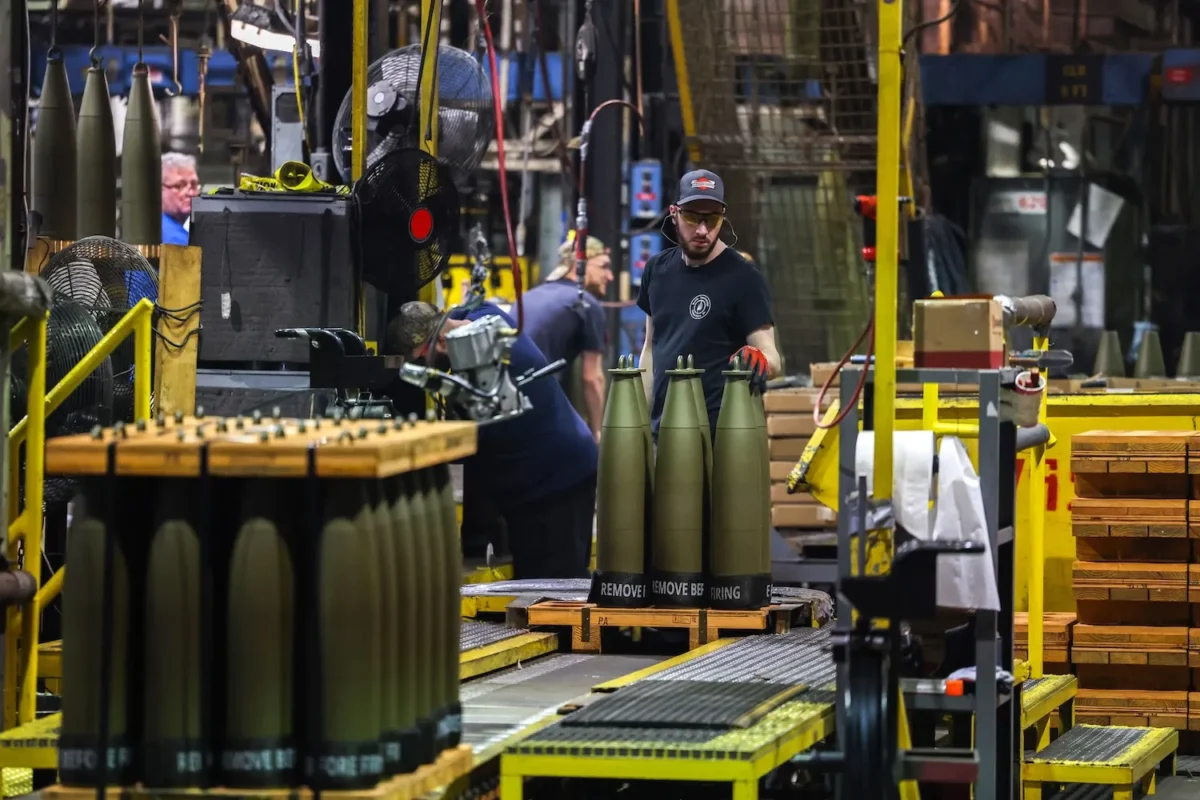
Lockheed Martin announced a $300 million investment in its Grand Prairie, Texas, operation as part of a broader plan to expand advanced munitions manufacturing. The company said its nationwide expansion plans would support 6,000 jobs, including 2,000 in Texas. The Grand Prairie project will expand its manufacturing footprint to more than 735,000 square feet and includes a partnership with Hadrian to introduce advanced manufacturing technology.
The investment highlights a central connection between manufacturing and national security: strategic capability depends on the ability to produce critical equipment at the necessary scale and pace. Facilities, machinery, and automation are important parts of that equation, but production also relies on skilled people, dependable inputs, and suppliers that can meet demanding requirements.
Why it matters: Expanding a major defense manufacturer’s footprint is one step toward greater capacity; ensuring the broader industrial base can support that capacity is another. Smaller manufacturers may provide specialized components, machining, materials, and other essential capabilities, but their participation depends on qualification requirements and actual procurement needs.
The opportunity is to build a defense manufacturing base that is not only larger, but also more connected and dependable. National security rests on production systems that can deliver—not just on announced investments.
4. AI and Robotics Bring Advanced Materials Closer to Production
Discovery 2 Scale, an advanced-materials company founded by a longtime Los Alamos National Laboratory scientist, plans to establish its headquarters and laboratory at Nambé Pueblo in New Mexico. The project is expected to create more than 80 high-skilled jobs and will combine AI and robotics with materials manufacturing. Potential applications include lighter military armor and radiation-resistant materials for fusion energy.
The project reflects a broader push to translate research and emerging technologies into practical manufacturing capabilities. AI and robotics may help companies develop and produce advanced materials, but the transition from promising technology to repeatable production requires testing, technical expertise, and a path to customers.
Why it matters: Manufacturing innovation is not simply about automating existing processes. It can also create new materials and production methods with applications across defense, energy, and other industries. Yet a planned facility is not the same as proven commercial output.
The next milestone will be execution: building the technical team, demonstrating reliable processes, and finding the industrial partners and customers needed to scale. That is where technology, talent, and manufacturing relationships come together.
Quick Hits
- HPE expands in Wisconsin: Hewlett Packard Enterprise plans to invest $75 million over five years in its Chippewa Falls operations, with 75 expected jobs. The expansion will increase testing, warehousing, and manufacturing capacity tied to its computing business. Separately, Wisconsin announced $6.6 million in training grants for 82 employers to train 3,823 workers through its WisTRAIN program. Together, the announcements highlight the connection between technology investment and workforce readiness.
- Corvid Technologies expands in North Carolina: The employee-owned defense contractor plans a $95 million expansion, including a 400,000-square-foot manufacturing facility, with 423 expected jobs. The project will support engineering and manufacturing of vehicle launch systems. It is a reminder that advanced defense manufacturing also grows through specialized firms beyond the largest contractors.
- More investment in Virginia and Georgia: M.C. Dean announced a planned $412 million Virginia expansion across two facilities, with 1,950 expected jobs. A Dutch manufacturer also plans to invest $77 million to expand a Georgia semiconductor-equipment plant, adding 120 jobs. Both projects point to investment in specialized manufacturing capabilities, though their long-term effects will depend on execution and demand.
- Transformer supply chain draws investment: Hitachi Energy selected London, Ontario, for a planned CAD $479 million transformer-insulation factory, with more than 100 expected jobs and completion targeted for 2028. Although the project is in Canada, it is relevant to the North American industrial ecosystem and the supply chains supporting electrical infrastructure.
- Battery partnerships extend beyond the vehicle: Rivian and Redwood Materials are expanding their existing relationship to include manufacturing scrap and end-of-life battery packs, building on a planned 10 MWh second-life storage system at Rivian’s Normal, Illinois, plant. The development points to the growing role of battery reuse and recycling in industrial energy and resource management.
The Bottom Line: Capacity Is Built Through Connections
This week’s developments span factory output, automotive suppliers, defense production, advanced materials, computing, and workforce training. Taken together, they show that American manufacturing is not one story moving in one direction. It is a collection of industries and regional networks responding to different demands and investing in different capabilities.
The common thread is the need to connect those capabilities. Large manufacturers need dependable suppliers. Smaller manufacturers need access to customers, clear requirements, and opportunities to invest with confidence. New technology needs skilled people who can put it to work. And strategic industries need production networks that can deliver reliably when it matters most.
The measure of progress is therefore not simply how many facilities are announced or how much capital is committed. It is whether those investments become productive capacity—and whether that capacity strengthens the wider network of American manufacturers.
That is how manufacturing investment becomes lasting industrial strength.