
August 2026 Monthly Manufacturing Insights
U.S. manufacturing remained in expansion territory in August, though momentum cooled from July’s four-year high. Production stayed strong, new orders continued to grow, and employment expanded for a second straight month. At the same time, manufacturers faced slower supplier deliveries, persistent input inflation, and a less certain demand outlook.
The ISM Manufacturing PMI registered 54.6 percent, down from 55.6 percent in July but still marking an eighth consecutive month of expansion. S&P Global’s U.S. Manufacturing PMI held at 53.9, signaling another solid improvement in operating conditions.
The two surveys tell a similar story: manufacturing is still growing, but supply constraints and higher costs are making that growth harder to convert into output and margin.
A Month in Manufacturing Data
Perspectives from the ISM Report
August marked ISM’s eighth consecutive expansionary month. Production registered 58.3 percent, New Orders 53.7 percent, and Backlog of Orders 51.8 percent. All three declined from July but remained above 50. Production grew for a tenth consecutive month. Fifteen of 18 industries reported growth, including primary metals, electrical equipment, transportation equipment, fabricated metal products, and machinery.
Employment registered 51.2 percent, down from 52.8 percent. July marked the first expansionary reading in ISM’s Employment Index in 33 months. August’s reading remained positive, although hiring momentum in the survey slowed.
All five components of the headline PMI remained above 50. However, Supplier Deliveries works differently: an above-50 reading signals slower deliveries, not improving supplier performance. Its August reading increased to 59.3 percent, marking a ninth month of slowing deliveries.
The Prices Index held at 71.1 percent, indicating a 23rd consecutive month of rising raw material prices. Electronic and electrical components remained in short supply.
Insights from S&P Global
S&P Global’s final August reading points to continued improvement in manufacturing conditions. Production growth slowed to its weakest pace since February, while new orders increased at a rate similar to July. Higher prices and constrained supplies continued to weigh on operating momentum.
Manufacturers built safety stocks to protect against potential price increases and disruption, although longer lead times complicated those efforts. Backlogs increased for a sixth consecutive month as higher order volumes and material shortages left more work unfinished.
Employment increased at the fastest rate of 2026, and business confidence reached a three-month high. Those findings suggest that companies still anticipate opportunities despite the immediate production challenges.
Demand remained concentrated in the domestic market. S&P reported a fourteenth consecutive monthly decline in export orders, with tariffs weighing on overseas sales.
What the Data Means
August looks more like a moderation in growth than a reversal. July’s ISM headline reading was the highest since May 2022, making it a particularly strong comparison point.
The surveys nevertheless differ on exports. ISM’s New Export Orders Index increased to 53.2 percent, while S&P reported declining foreign orders. That disagreement argues against treating international demand as a clear source of momentum.
There is also a distinction between a larger backlog and a stronger business. When unfinished work accumulates because components are unavailable, it can delay deliveries and revenue rather than represent additional production capacity. S&P’s combination of growing backlogs and material shortages makes that distinction especially relevant.
ISM’s Customers’ Inventories Index remained in “too low” territory at 42.8 percent. Replenishment could support future orders if demand holds, but it is not guaranteed.
For manufacturers, the practical implication is to examine the quality and timing of demand, not just its direction. Are customers placing repeat orders or buying ahead of expected price increases? Can suppliers meet the dates needed to complete those orders? Does the quoted margin still hold when materials arrive?
Those questions help distinguish sustainable growth from activity that consumes more working capital without delivering a comparable improvement in earnings.
For example, buying additional materials can protect a production schedule, but it also increases exposure if customers postpone orders. Qualifying an alternative supplier may reduce dependence on a constrained source, yet introduce testing costs and approval delays. The right response depends on the component, customer commitment, and cost of a missed delivery.
New Factory and Manufacturing Announcements
August brought major planned investments in chip production, power infrastructure, and pharmaceutical manufacturing. IndustrySelect’s monthly roundup highlights projects across these sectors, but their purposes and development schedules differ.
SpaceX Plans a $16.8 Billion Semiconductor Complex in Texas
SpaceX plans a vertically integrated semiconductor manufacturing complex in Grimes County, Texas. The first phase represents more than $16.8 billion in investment and is expected to create approximately 3,000 jobs.
The planned Terafab would combine logic chip production, memory, and advanced packaging to meet SpaceX’s future semiconductor requirements. The announcement describes planned capacity serving the company’s needs, not an operating facility or an immediate source of chips for other manufacturers.
Siemens Expands Electrical Infrastructure Operations
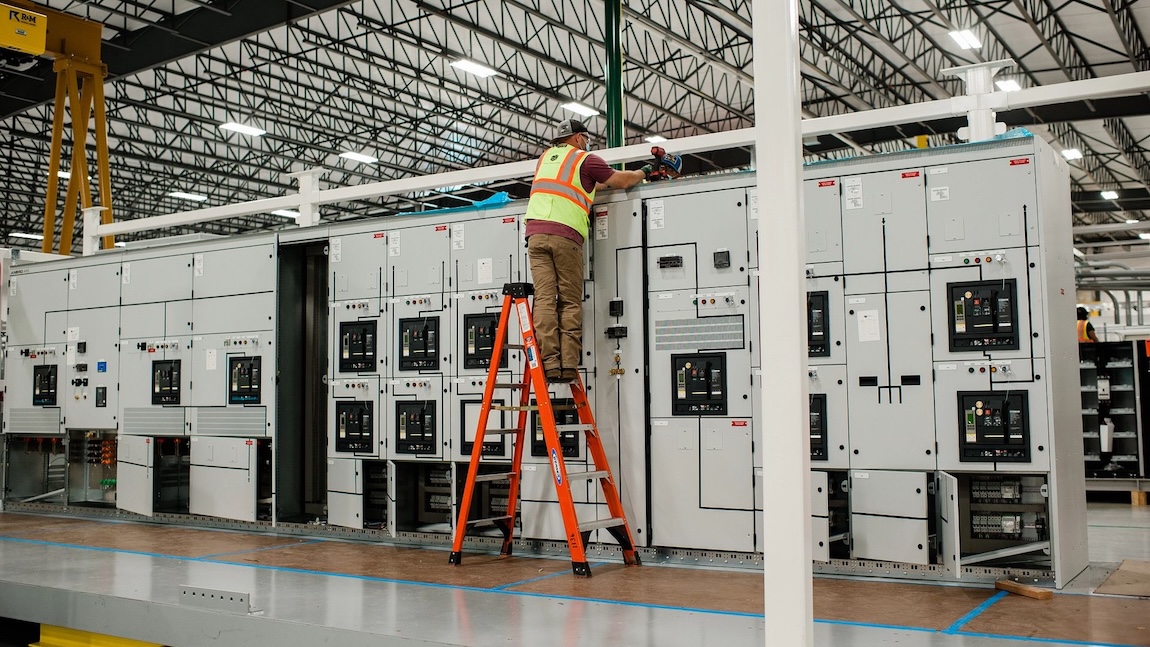
Siemens announced more than $200 million in investments across Georgia and Texas. More than $185 million is allocated to a 550,000-square-foot plant in Pendergrass, Georgia, producing low-voltage electrical equipment for data centers and related infrastructure.
The separate $19 million Grand Prairie, Texas, project is a testing and warehousing facility supporting Siemens’ nearby switchgear factory, rather than another standalone production plant. Together, the investments are expected to create more than 1,500 jobs. Siemens cites demand from AI infrastructure, cloud computing, and other power-intensive markets.
IEM Announces a $200 Million San Antonio Plant
Industrial Electric Mfg. announced a $200 million, 1-million-square-foot manufacturing facility in San Antonio. The plant will produce custom power distribution and control systems for customers across industrial and infrastructure markets.
The company expects up to 3,000 jobs by 2030. Development will proceed in phases, with construction and hiring schedules still to be announced. The investment is intended to expand production and support faster customer deliveries, but its benefits depend on the planned capacity coming online.
STERIS Plans a $600 Million North Carolina Center
STERIS announced a $600 million formulated chemistries manufacturing and distribution center in Sanford, North Carolina. The planned 600,000-square-foot campus will support sterilization, infection prevention, and contamination control products.
The project combines expansion with consolidation. STERIS expects to transfer existing chemistries manufacturing and distribution operations from St. Louis, Missouri, and Plymouth, Minnesota, to the new site. Operations are expected to begin in two to three years, starting with distribution. The full investment therefore should not be treated as entirely additional U.S. production capacity.
Genentech Invests $750 Million in Oregon
Genentech announced approximately $750 million for a new device fill-finish manufacturing facility at its Hillsboro, Oregon, campus. The expansion will support advanced drug-delivery devices, including prefilled syringes and autoinjectors.
The company expects approximately 250 manufacturing jobs, with commercial operations beginning in 2031. Unlike the electrical infrastructure projects, this investment is focused on future medicines and delivery-device capabilities, rather than supplying the data center buildout.
Future Outlook
The investment announcements reflect different expectations: rising power-equipment demand, internal semiconductor requirements, new pharmaceutical capabilities, and production-network consolidation. They demonstrate continued commitments in selected sectors, not a uniform expansion across the industrial economy.
For the remainder of 2026, the immediate question is whether manufacturers can translate orders into completed, profitable shipments. New facilities with multiyear development schedules cannot be assumed to resolve today’s sourcing problems.
September’s new-order and backlog readings will help distinguish a temporary cooling from a more persistent slowdown. Delivery times and input prices deserve equal attention. Improving orders would offer limited reassurance if companies still cannot secure the materials needed to fulfill them.
Manufacturers should weigh inventory protection against the cash it ties up, review supplier commitments against production schedules, and revisit pricing assumptions before accepting longer-dated work. The opportunity is not simply to grow order books, but to fulfill them without sacrificing delivery performance or margin.