
There was a lot of manufacturing news this week, but the bigger story isn’t any single factory. It’s the growing evidence that companies are making real, long-term bets on producing more in the United States.
Bristol Myers Squibb’s $2.3 billion commitment to a new Houston manufacturing facility is one example. Ford says it will move production of some Lincoln models from China to the U.S. beginning in 2030. Apple is expanding its manufacturing footprint in Houston. And U.S. officials are increasingly focused on helping domestic suppliers meet the demand created by these investments.
That last piece may be the most important.
Because building a factory is one thing. Building the network of American businesses that can supply it is another.
The United States has an enormous distributed manufacturing base, particularly among small and midsized companies. The challenge is making those capabilities easier to find, qualify, and connect. This week’s news offers several reminders that the next phase of American manufacturing won’t simply be about bringing production home. It will be about connecting the businesses that make domestic production possible.
1. Reshoring Is Moving From Strategy to Capital Allocation
Ford’s decision to move some Lincoln production from China to the United States is another tangible sign that supply-chain localization is becoming a business decision, not just a policy aspiration.
Ford plans to begin moving production of some Lincoln models in 2030. The Lincoln Nautilus currently faces a 52.5% U.S. tariff when imported from China, and Ford says tariffs and restrictions on Chinese technology both played a role in its decision.
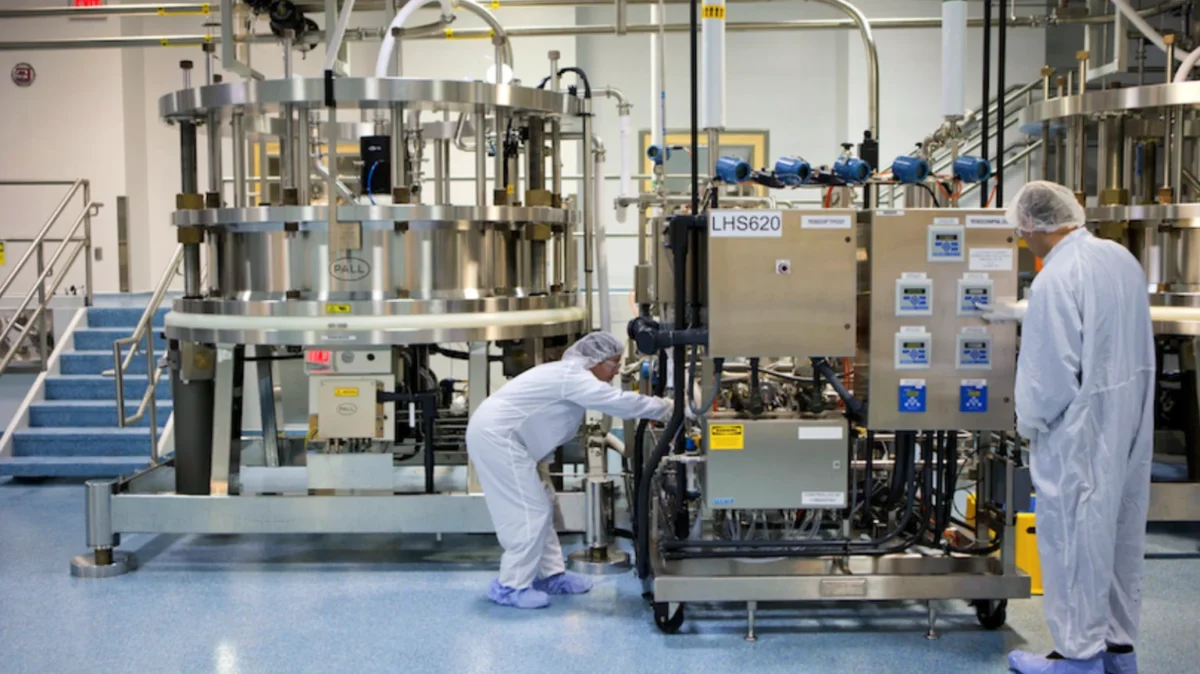
Bristol Myers Squibb is making an even more direct capital commitment. Its planned Houston facility will represent roughly $2.3 billion in investment, create nearly 500 skilled jobs, and generate approximately 2,000 construction and related jobs during development. The facility will manufacture small-molecule medicines, biologics, and antibody-drug conjugates.
And this isn’t happening in isolation. Reuters reported that global pharmaceutical companies have announced roughly $500 billion in U.S. investments across manufacturing, research, and supply-chain infrastructure.
The important point is that these companies are making decisions based on a broader calculation.
Cost still matters. But so do tariffs, regulatory exposure, supply-chain security, resilience, and optionality.
That is what makes this look increasingly like a structural shift rather than a temporary reshuffling of production.
2. The Factory Is Only the Beginning
Here’s the manufacturing story that deserves more attention.
As new factories come online, where do all the parts come from?
U.S. officials spent part of this week focused on exactly that question. During a visit to Hanwha’s Philadelphia shipyard, officials announced a pilot Strategic Vendor Program intended to strengthen domestic supply chains and help smaller businesses scale.
The numbers at the shipyard illustrate the challenge. Hanwha plans to invest $5 billion in the facility and potentially increase employment from roughly 2,000 to 10,000 workers. Each ship can require more than 1,000 suppliers, with about two-thirds currently based in the United States.
That’s the American manufacturing model at its best: not one giant factory doing everything, but a network of specialized companies working together.
The problem is that the network isn’t always easy to navigate.
Officials cited a company in Syracuse that had struggled to find a U.S. supplier for a specialized component. That is a surprisingly fundamental problem at a moment when billions of dollars are being committed to expanding domestic production.
We can build the factory and we can buy the equipment, but if the right supplier is three states away and the buyer doesn’t know that company exists, we still have a capacity problem. This is where technology can become a force multiplier. AI and software should make it easier to discover capabilities, identify potential partners, and build the relationships required to actually manufacture something.
That’s very different from treating manufacturing as an anonymous marketplace. Manufacturing is a team sport done in community.
3. Manufacturing Policy Is Becoming National Security Policy
The third theme running through this week’s news is the growing connection between manufacturing capacity and national security.
The administration announced new tariffs on imported drones, with duties reaching 100% for certain higher-end systems and 25% for less sensitive products. The policy is explicitly aimed at reducing reliance on Chinese drone manufacturing and encouraging domestic production.
The government also plans an onshoring program for companies investing in domestic drone manufacturing.
Whatever one’s view of individual tariff rates, the strategic question is becoming increasingly difficult to ignore: What capabilities does America need to be able to produce domestically when it matters?
Drones are an obvious example. Pharmaceuticals are another. Shipbuilding is another.
These aren’t simply questions about economic efficiency.
They are questions about whether the United States has enough manufacturing capacity, enough suppliers, and enough skilled people to respond when circumstances change.
And that brings us back to the small manufacturer.
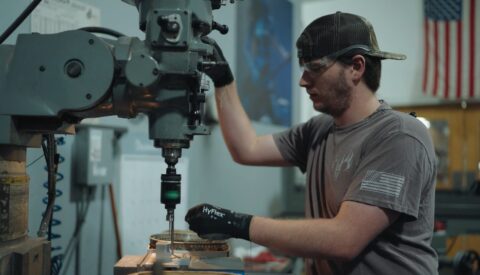
A 50-person machine shop isn’t thinking about national manufacturing strategy when the doors open Monday morning. Its owners are thinking about orders, employees, equipment, cash flow, and getting parts out the door.
But collectively, those companies are a significant part of America’s strategic manufacturing capacity.
If the country wants more resilient supply chains, it needs more than a handful of massive facilities. It needs a broad base of capable companies that can surge, adapt, and work together.
Around the Horn
AI is creating another manufacturing demand wave. Major manufacturers are seeing increased demand from the infrastructure required to build AI data centers, creating new opportunities for companies supplying power-generation and industrial equipment.
Manufacturing employment is moving in the right direction, but slowly. U.S. manufacturing employment increased by roughly 5,000 jobs in July, although employment remained below its level a year earlier.
Stellantis shows that reshoring isn’t always a straight line. The company is considering the future of its Brampton, Ontario, assembly plant after moving Jeep Compass production to Illinois. North American supply chains are being reorganized across borders as companies respond to changing economics and policy.
The domestic supplier challenge extends beyond traditional manufacturing. From shipbuilding to advanced technology, companies investing in America increasingly need specialized components that aren’t always easy to source domestically.
The Bigger Picture
Three stories from this week are worth remembering.
Capital is moving. Ford, Bristol Myers Squibb, Apple, and others are putting real money behind U.S. manufacturing.
The network matters. New factories create demand for thousands of suppliers, many of them small and midsized businesses.
Resilience is becoming strategic. Drones, pharmaceuticals, shipbuilding, and other critical industries are increasingly being viewed through the lens of national security as well as cost.
That combination creates an enormous opportunity for American manufacturing.
The United States doesn’t need to copy China’s model of massive vertically integrated factories. Our advantage is different: thousands of specialized businesses with deep expertise, entrepreneurial ownership, and the ability to work together.
But that advantage only matters if those businesses can find each other.
The next phase of the American manufacturing renaissance won’t be measured only by how many factories we build.
It will be measured by how effectively thousands of businesses come together to build what we need.
That’s the network we need to build.