
Manufacturing Keeps Building
If you’ve been looking for evidence that the long-term manufacturing shift is still underway, this week delivered plenty of it.
While economic indicators painted a mixed picture, manufacturers continued making substantial bets on America’s industrial future. More than $3.6 billion in announced investments flowed into domestic manufacturing projects spanning aerospace, semiconductors, and advanced computing. At the same time, policymakers continued exploring new ways to strengthen domestic supply chains through trade policy and sourcing requirements.
Taken together, the headlines point to a trend we’ve discussed before: manufacturers may be cautious about the next quarter, but they continue investing for the next decade. The push toward greater supply chain resilience, domestic production capacity, and strategic industrial capabilities remains very much intact.
Three Key Insights
- $3.6B in announced manufacturing investments this week—including Blue Origin’s $600M Florida expansion, Micron’s $2B Virginia project, and IBM’s proposed $2B quantum foundry initiative—signals continued long-term confidence in U.S. industrial capacity.
- Trade policy is increasingly shaping supply chains, with a proposed 50% U.S.-content requirement for USMCA vehicles and a new U.S.-Taiwan tariff agreement aimed at influencing sourcing decisions.
- Despite a 1.1% decline in core capital goods orders, U.S. steel production rose 8.7% year-over-year and durable goods orders increased 7.9%, highlighting continued strength in key manufacturing sectors.
$3.6 Billion Says Manufacturers Are Playing the Long Game
Some of the most significant news this week came from a series of major investment announcements across advanced manufacturing sectors.
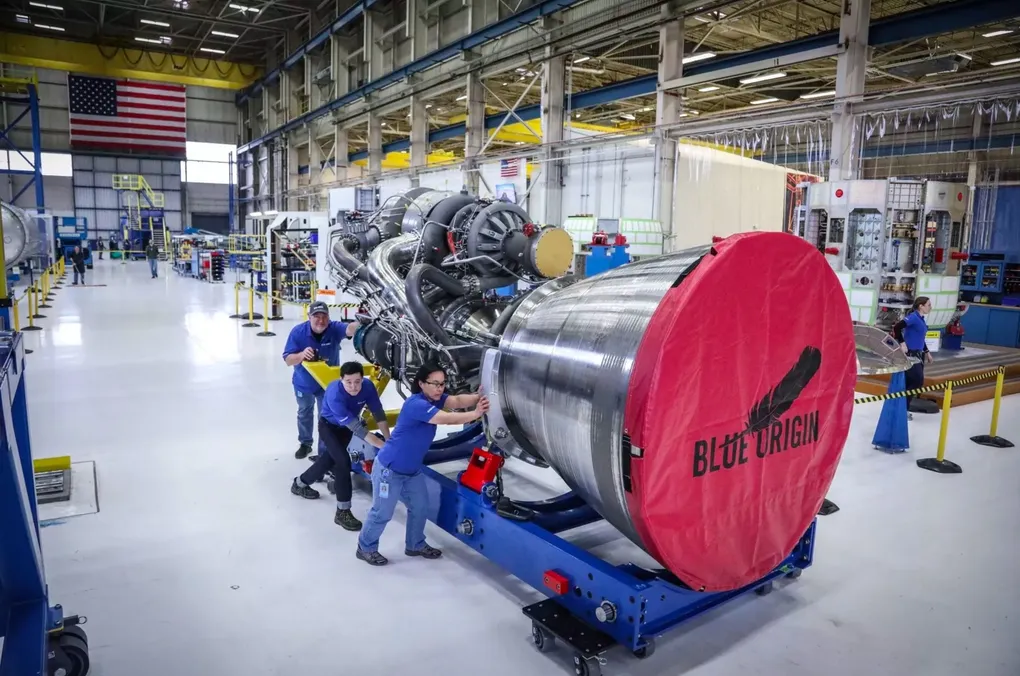
Blue Origin announced a $600 million expansion in Florida focused on upper-stage rocket manufacturing. Micron unveiled a $2 billion expansion project in Virginia, while IBM and the Department of Commerce announced plans to establish America’s first purpose-built quantum chip foundry in New York through a proposed $2 billion public-private investment effort.
What’s notable isn’t simply the dollar amount. It’s where the capital is going.
These investments are concentrated in industries that will shape future economic competitiveness: aerospace, semiconductors, advanced computing, and quantum technologies. Manufacturers continue to allocate capital toward capabilities that will matter not only commercially, but strategically.
For a country seeking to strengthen domestic production capacity, that’s an encouraging signal.
Trade Policy Continues to Reshape Manufacturing Decisions
Trade policy remained front and center this week as the Trump administration proposed requiring automobiles qualifying under USMCA to contain at least 50% U.S.-made content.
Separately, the United States and Taiwan finalized a trade and investment agreement that establishes 15% tariff rates on selected industrial imports, including certain automotive parts, wood products, and aircraft components.
These developments highlight an important shift in how policymakers increasingly view trade policy. The discussion is no longer solely about market access or lowering costs. It is increasingly about where products are made, where suppliers are located, and how supply chains are structured.
For manufacturers, sourcing decisions are becoming more strategic—and potentially more local.
Manufacturing Data Sends a Mixed Signal
The week’s economic data offered a reminder that the manufacturing recovery remains uneven.
Core capital goods orders fell 1.1% in April, suggesting some businesses remain cautious about near-term investment. At the same time, overall durable goods orders increased 7.9%, helped by strong aerospace demand.
Meanwhile, U.S. steel production continued to strengthen. Weekly output reached 1.87 million net tons, up 8.7% compared to the same period last year, while utilization rates climbed to 81%.
The takeaway isn’t that manufacturing is booming everywhere. Rather, it appears many manufacturers are balancing short-term uncertainty with long-term confidence in domestic production opportunities.
AI and Advanced Manufacturing Continue to Converge
Another recurring theme this week was the growing intersection between manufacturing and advanced technologies.
Kawasaki and NVIDIA announced plans for a Physical AI Development Hub in Silicon Valley aimed at accelerating collaboration around AI and semiconductor technologies. Industry reports also highlighted growing adoption of AI and agentic AI tools across manufacturing operations.
The technology conversation is increasingly moving beyond experimentation. Manufacturers are beginning to evaluate how AI can improve planning, operations, and decision-making while addressing growing complexity across supply chains.
The most promising applications aren’t replacing manufacturing expertise—they’re helping experienced operators, engineers, and supply chain leaders make better decisions faster.
Around the Horn
China Manufacturing Activity Holds Steady
China’s manufacturing PMI is expected to remain near the expansion threshold, reflecting continued strength in advanced technology sectors despite broader demand challenges.
Workforce Challenges Persist
Manufacturers continue reporting difficulty attracting younger workers, with increasing focus on career pathways, workplace culture, and long-term development opportunities.
Industrial Safety Reminder
A tank implosion at a Washington state pulp and paper mill left one worker dead and several others missing, highlighting the ongoing importance of operational safety across industrial facilities.
Looking Ahead
The biggest question heading into June is whether investment momentum continues despite softer business spending data.
Watch for further developments around USMCA negotiations, additional manufacturing investment announcements, and continued activity in semiconductor, aerospace, and advanced technology manufacturing.
If this week offered any lesson, it’s that while economic cycles come and go, manufacturers continue making decisions based on where they believe the world will be ten years from now—not ten weeks from now.