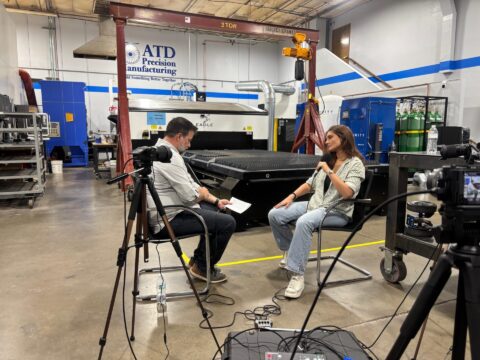

In a recent episode of the Manufacturing Executive Podcast, Talati dove into the practical applications of agentic AI — artificial intelligence systems designed to fill specialized roles — on the factory floor.
According to Talati, these AI agents are rapidly making their way into manufacturing, thanks to platforms like First Resonance’s ION Intelligence that make the technology accessible to operators. From checking the structure of issue reports to comparing work instructions against best practices and safety protocols, AI is starting to augment human workers across the factory.
We’re going to see AI agents that empower the manufacturing engineer to create better work instructions. We’re going to see AI engineers empower technicians and operators on the manufacturing floor, get better information and tribal knowledge of what used to float around in people’s heads.
Talati envisions a future where every worker is supported by a personalized team of AI agents. These digital assistants might start out handling routine tasks, much like interns, but will grow more sophisticated over time. Eventually, they could interact directly with factory systems, loading machine profiles, monitoring equipment health, and more — all in the service of freeing up humans to focus on higher-level, innovative work.
This human-AI collaboration is more than a nice-to-have, Talati argues; for US manufacturing, it’s a necessity. Amid geopolitical shifts and the push to reshore production, domestic manufacturers face the challenge of remaining competitive despite higher labor costs. AI could be the key to offsetting those expenses while also attracting a younger, digital-native workforce eager to work with cutting-edge technology.
I think AI is going to be necessary, especially here in the United States, to even make manufacturing viable…I think humans are going to have to work with technology, and we have the opportunity of working with AI agents to actually grow our workforce, right? Bring more people into the manufacturing workforce, because it is a lot more interesting.
For manufacturing leaders feeling overwhelmed by the rapid pace of technological change, Talati offers reassurance and advice. The sense of struggling to keep up is near-universal, he notes, given how quickly AI is evolving. His recommendation? Start small, with contained experiments. Encourage workers to dedicate an hour or two each week to learning about AI and brainstorming applications, like automating a manual reporting workflow. Platforms like ION Intelligence, now in beta, can facilitate these early explorations.
The road ahead is challenging, Talati acknowledges, but also filled with opportunity. As AI agents become more ingrained in factory operations, they have the potential to not just optimize production, but to fundamentally change the nature of manufacturing work — and to secure a thriving future for the industry. For those ready to take the first step, the invitation is open. “We’d be thrilled to work with more manufacturers to empower these types of workflows,” Talati says. The factory floor of the future is waiting.