
The last week of August showcased American manufacturing’s blend of policy turbulence, foreign investment, and steady regional growth. Washington grabbed headlines by voiding a $7.4B semiconductor research grant even as Intel secured an accelerated $5.7B in CHIPS Act funds. At the same time, Hyundai pledged $26B for U.S. projects and a Chinese copper-wire maker advanced a Texas factory to bypass tariffs. Beyond the headlines, expansions by GE Vernova, Merrill Steel, and ŌURA underscored the distributed capacity that defines America’s real manufacturing advantage.
Main Stories
Washington’s Shifting Semiconductor Strategy
The Story: The Commerce Department canceled a $7.4B research grant while Intel revised its CHIPS Act agreement, accelerating $5.7B in federal funds.
Why It Matters: These moves reveal volatility in federal industrial policy, raising questions about whether funding flows are strengthening durable capacity or just cycling through large incumbents.
The Bigger Picture: Policy execution gaps risk slowing reshoring momentum unless programs are designed to reach the broader network of small and mid-sized manufacturers.
Global Competitors Building on U.S. Ground
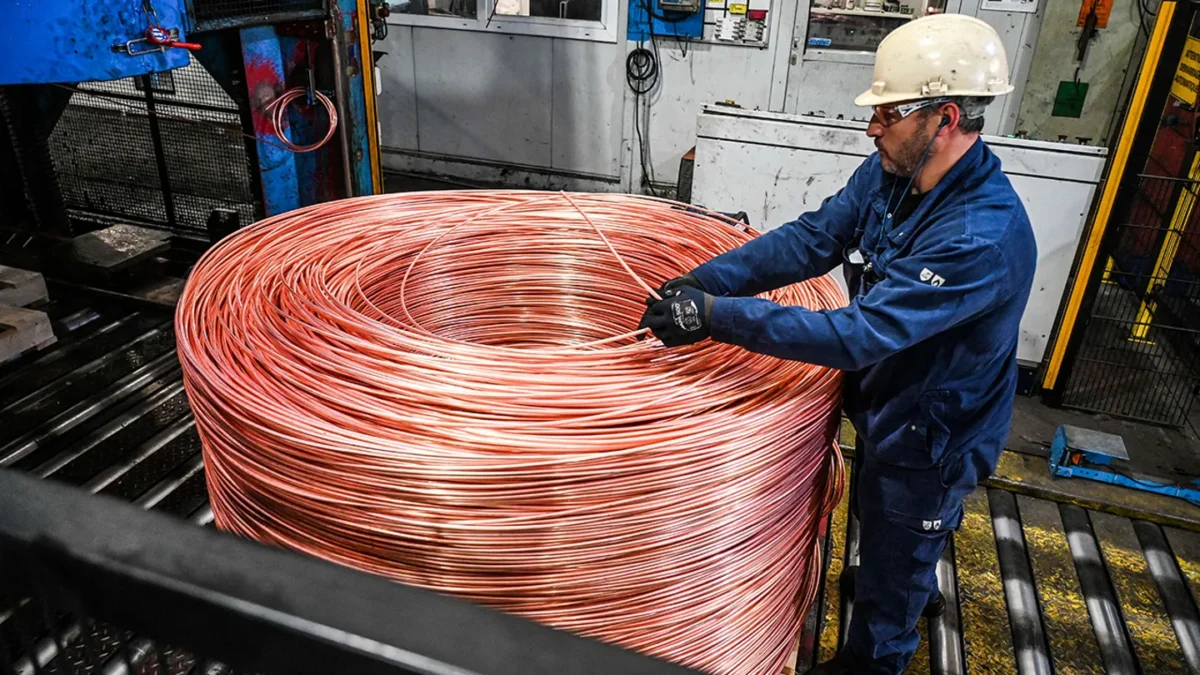
The Story: Hyundai committed $26B in U.S. investment through 2028, while a Chinese copper-wire producer announced a Texas factory to sidestep 50% tariffs.
Why It Matters: Both allies and competitors are embedding production inside America, reshaping local supply networks and long-term competitiveness.
The Bigger Picture: The global contest between America’s distributed model and China’s state-directed approach is now being fought on U.S. soil, factory by factory.
Distributed Capacity Expansions Across Regions
The Story: GE Vernova invested $41M in Schenectady, NY, Merrill Steel selected Arkansas for a new facility, and ŌURA announced a Texas factory tied to a Pentagon contract.
Why It Matters: These smaller projects build the “long tail” of capacity that underpins U.S. resilience and supplier diversity.
The Bigger Picture: While less visible than mega-chip fabs, these expansions strengthen the relational manufacturing networks that give America its strategic edge.
Regional Manufacturing Pulse
The Story: Fed surveys revealed uneven performance: Texas expanding (production index 15.3), Mid-Atlantic contracting (−7 composite), Kansas City flat (index 1).
Why It Matters: Regional differences show how manufacturers feel policy and demand shifts differently depending on geography and sector.
The Bigger Picture: Manufacturing remains deeply relational and local, with resilience depending on the health of many interconnected regional ecosystems.
Quick Hits / Around the Horn
- Critical minerals: U.S. considers adding copper and potash to its critical minerals list, signaling potential domestic mining and processing opportunities.
- Investor concerns: Intel’s revised CHIPS deal sparked debate over whether Washington is entering a new era of interventionist industrial policy.
- IndustrySelect roundup: August factory announcements in biotech, energy, and consumer goods highlight diversification beyond heavy industry.
- IndustryWeek retrospective: “25 events that changed manufacturing in 2025” captures the year’s defining industrial shifts.
Closing / Looking Ahead
This week reinforced three truths: policy remains volatile, global competitors are embedding themselves in the U.S., and distributed capacity continues to expand. September’s ISM Manufacturing Index will provide the next big data point on momentum, while tariff-related supply chain shifts bear close watching. The mission ahead is clear: support the long tail of small and mid-sized manufacturers who form the backbone of American resilience and competitiveness.